If you’ve ever looked at a $300 ultralight backpack and thought, “I could make that,” you’re right. This tutorial shows you exactly how.
The short version: you can sew a roll-top, 30-liter DIY ultralight backpack on a regular home sewing machine. You need about 1–1.5 yards of pack fabric (X-Pac, ripstop nylon or DCF), half a yard of stretch mesh, a scrap of closed-cell foam, and some webbing and buckles. My DIY 30L pattern gives you every piece, 8 pages of instructions and a 2.5-hour sew-along video.
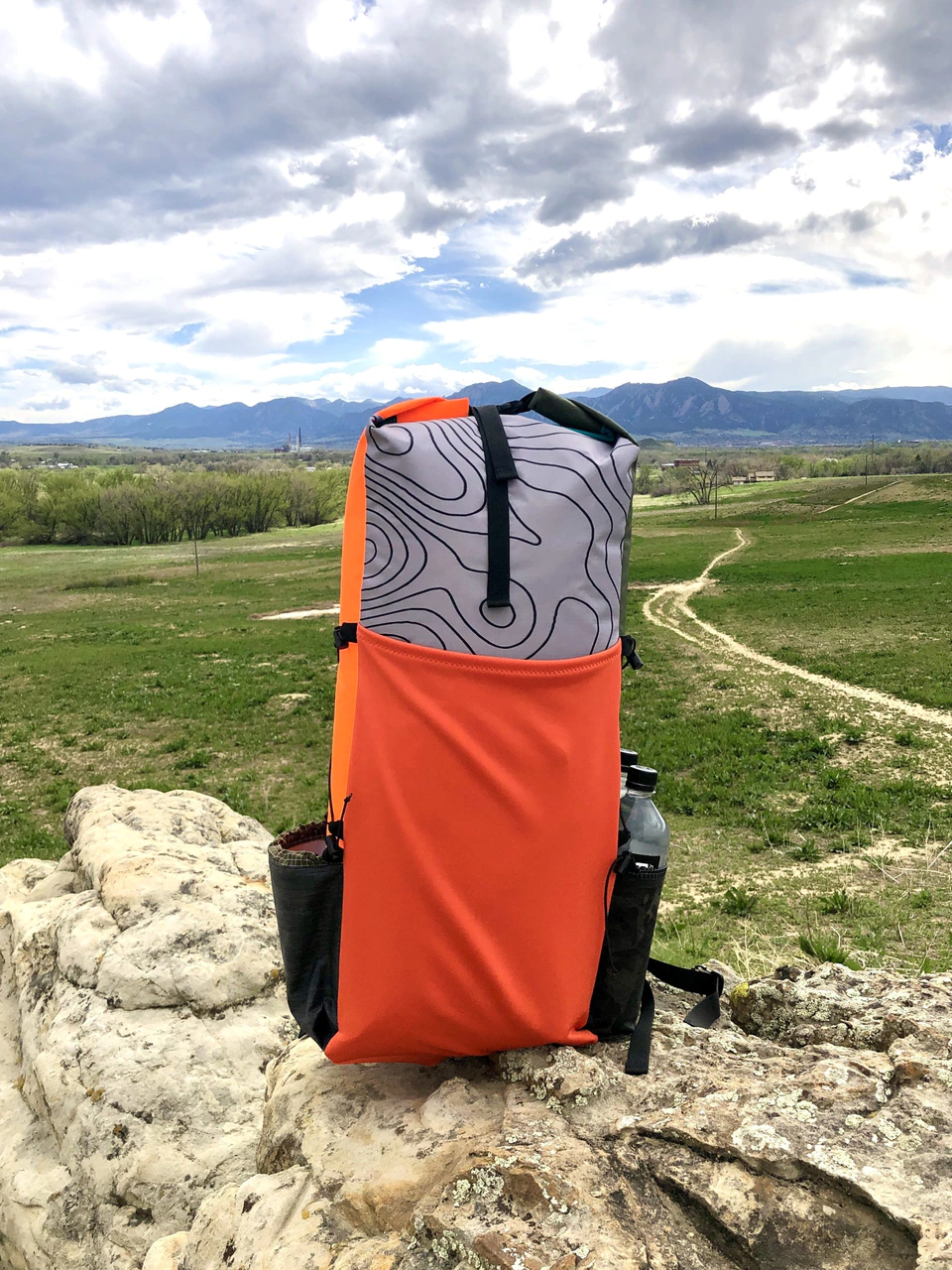
Making your own gear is one of the most rewarding skills an outdoors person can pick up. It saves money, and it teaches you what actually makes a pack carry well on the trail. This sew-along walks through the full build of a 30-liter ultralight backpack, designed from the start as a first backpack project for beginner and intermediate sewists.
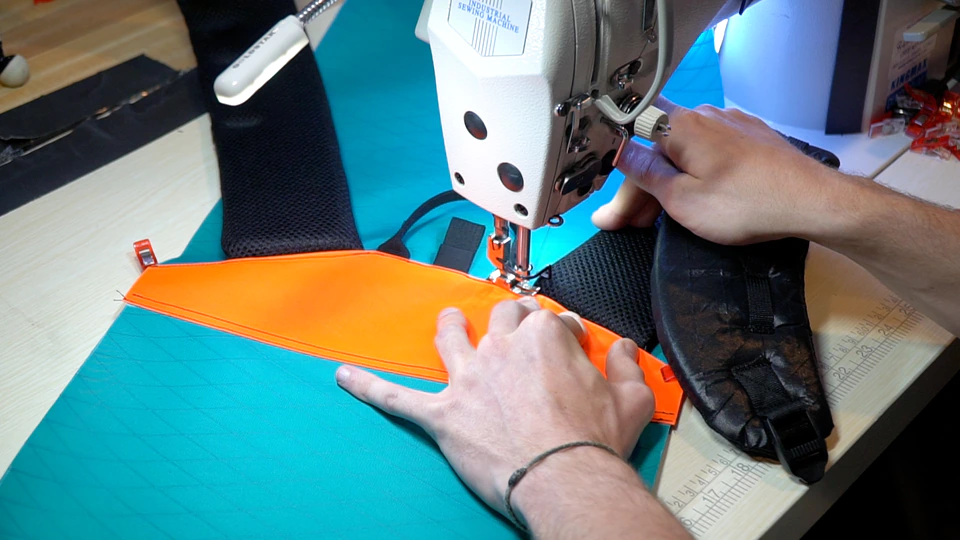
DIY 30L Backpack Pattern and Tutorial Video
PDF pattern in A0 + A4 sizes, 8 pages of instructions, and the full 2.5-hour sew-along video. Instant download.
Get the 30L Backpack Pattern →Watch the video above to see the pack come together. The pattern download includes the complete 2.5-hour step-by-step tutorial, with tips for getting comfortable with your machine and fixing problems as you go.
What the Finished 30L Backpack Has
- Roll-top closure with a buckle across the top
- Large front stretch pocket plus a stretch pocket on the bottom
- Two side pockets with shock-cord cinches
- Top compression strap and shock-cord side compression
- Foam-padded shoulder straps with daisy chains and an adjustable sternum strap
- Haul handle at the top of the back panel
- Removable hip belt that clips onto 1″ webbing loops
- Your own torso length, set while you sew
It is a smaller, simplified version of my Front Range 40L. I cut out steps a first-time DIYer doesn’t need and dropped unnecessary pieces to keep the material cost down.
What You’ll Learn
The video covers the complete construction of a functional, trail-ready 30L backpack from scratch:
- Material selection: which ultralight fabrics (like X-Pac and DCF) work best for a pack body, and why it matters (see my ultralight fabric comparison for full specs)
- Reading and printing a PDF pattern: including how to get accurate scale at a print shop
- Seam construction and seam binding: the core techniques for a durable, weather-resistant bag
- Installing hardware: buckles, ladder locks, slik clips, webbing, and compression straps
- Strap construction: building shoulder straps that are comfortable under a real load
Materials and Tools You’ll Need
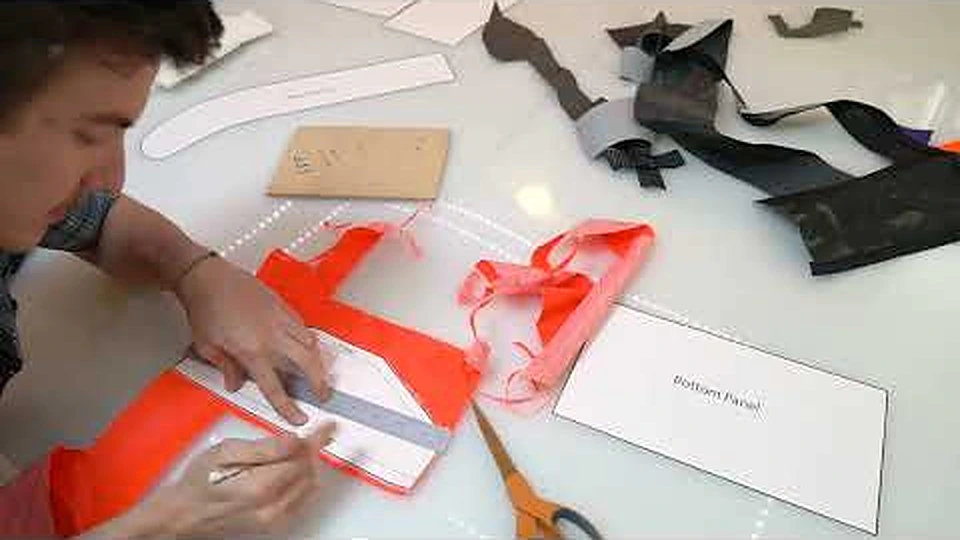
The full cut sheets are in the pattern download. Here is the shopping list, so you can order materials before you start:
- Pack fabric: 1–1.5 yards of X-Pac, any ripstop nylon, or DCF. Compare the fabrics here.
- Stretch pocket fabric: 0.5–1 yard of Spandura, lycra mesh, or any fabric with 2- or 4-way stretch
- Closed-cell foam: one piece about 20″ × 10″, ¼”–½” thick, for the shoulder straps (a foam camping pad works)
- 3D spacer mesh (optional): the breathable padding on the underside of the shoulder straps
- Webbing and cord: ½”, ¾” and 1″ webbing, ¾” grosgrain ribbon, and shock cord
- Hardware: a ½” buckle and two MOLLE clips for the sternum strap, ¾” ladder locks and buckles, 1″ slik clips and a dual-adjust buckle for the hip belt, and two cord locks
Tools: most home sewing machines can handle this project. You also need Tex 40 / V46 thread (Gütermann Mara 70 works great), size 16–18 needles, scissors, a chalk pencil or fine marker, a ruler or yardstick, sewing clips, and a lighter to seal webbing ends.
How to Sew a 30L Backpack, Step by Step
The build happens in six stages. The video and the instruction PDF cover each one in detail:
- Print and cut the pattern. Print the A0 sheet at a print shop or tile the A4 pages at home. Then trace each piece onto your fabric and cut it out.
- Build the side pockets. Sew the cinch channels and shock-cord loops, and fold a pleat at the bottom.
- Add the stretch pockets. Sew a stretch pocket onto the bottom panel and a large one onto the front panel, using a zig-zag stitch.
- Make the shoulder straps. Sew them, turn them, slide in the foam, then add the daisy chains and sternum strap.
- Set up the back panel. Add the strap anchors and hip belt loops, and place the shoulder strap anchor to match your torso length.
- Final assembly. Join the panels with a ⅜” seam allowance and reinforce the seams (faux flat-felled or grosgrain binding). Then attach the bottom, turn the pack right side out, and hem the roll top. Finish by adding the buckle and hip belt.
Who Is This For?
This project is built for beginner to intermediate MYOG sewists. If you’ve finished one simple project before, even a tote bag or a stuff sack, you have the foundation for this build. The pattern takes the guesswork out of cutting, and the video goes step by step at a pace you can actually follow at your machine.
Never sewn anything? Start with my free packing cube pattern to learn zippers and basic assembly, then come back to this one.
What First-Time Pack Makers Say
These are reviews from people who bought the pattern:
My first foray into making my own gear. This project has been fairly easy to follow and achieve great results from a complete novice. Highly recommend this project.
Stuart
Clear pattern with directions and the accompanying video tutorial is fantastic.
Paul B.
The video and pattern were a good resource for making my first pack and something to go back to if needed.
Connor
What’s Included With the Pattern
- Digital PDF pattern in both A0 and A4 sizes
- 8 pages of detailed assembly instructions and material suggestions
- The complete 2.5-hour step-by-step tutorial video
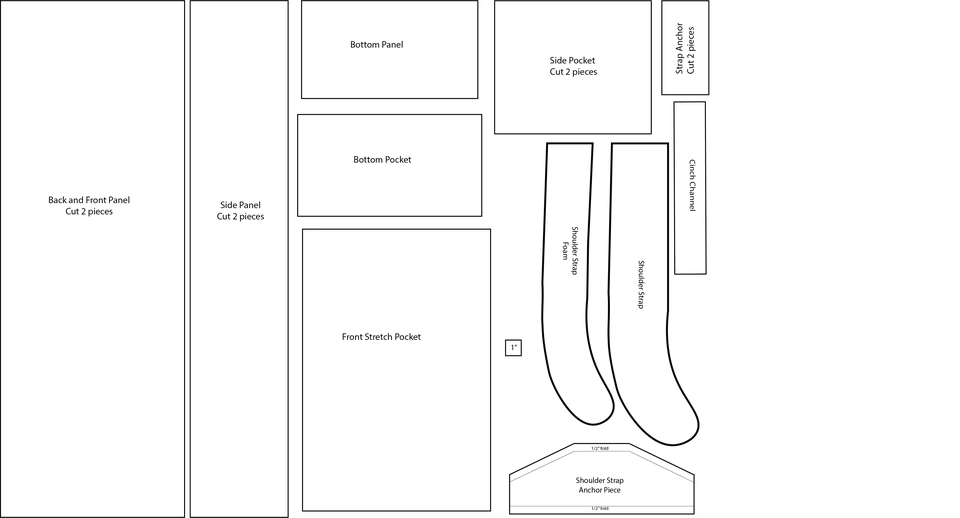
Printing tip: print the A0 file at a local print shop (it comes out around 34″ × 46″). It’s cheap, and a single large sheet is far more accurate than taping together dozens of letter-size pages. If you do print at home on A4, check the scale square before you cut anything.
DIY 30L Backpack Pattern and Tutorial Video
Everything you need to cut and sew your first ultralight backpack: the pattern, the instructions, and the 2.5-hour video.
Get the DIY 30L Backpack Pattern →Frequently Asked Questions
How much fabric do I need to make a 30L backpack?
About 1 to 1.5 yards of main pack fabric plus 0.5 to 1 yard of stretch fabric for the pockets. You also need a 20″ × 10″ piece of closed-cell foam for the shoulder straps and short lengths of webbing, grosgrain and shock cord. The pattern has a cut sheet listing every webbing length.
Can I sew an ultralight backpack on a home sewing machine?
Yes. The 30L pattern was designed to be sewn on most home machines. Use Tex 40 / V46 thread and a size 16–18 needle, and go slowly where webbing and straps stack up into thick layers.
What is the best fabric for a DIY backpack?
X-Pac, any ripstop nylon, and DCF all work with this pattern. Ripstop nylon is the cheapest place to start. X-Pac and DCF add waterproofing at a higher price. My ultralight backpack fabric comparison lists weight, waterproofing and strength for each fabric.
Can I print the pattern at home?
Yes. The download includes an A4 version you can print on a home printer and tape together; check the scale square before you cut. For the most accurate pieces, print the A0 file (about 34″ × 46″) at a local print shop.
Can I adjust the torso length?
Yes. You set the torso length while sewing the back panel. Pick your back length (for example 19″), subtract 3″, and place the shoulder strap anchor at that height. The instructions walk you through it.
Does the backpack have a hip belt?
Yes. The hip belt is made from 1″ webbing and clips onto loops at the bottom of the back panel, so you can remove it when you don’t need it. If you would rather have a fixed belt, skip the clips and sew it on.
How is this different from the 30L Alpine Zip pattern?
Both are 30-liter roll-top packs. The 30L Ultralight Alpine Zip pattern adds a zip front and lets you customize the daisy chains, strap placement and torso length. Choose the DIY 30L if you want the classic ultralight style with big stretch pockets.
Whether it’s your first pack or your fifteenth, there’s something uniquely satisfying about stepping onto the trail with something you made yourself. Start here.
— Matt Evans, Red Paw Packs