Custom Backpacks: 14-week lead time·Custom Fanny Packs: 4-week lead time·In-Stock Items: Ship within 1–2 days·Lifetime warranty on all packs ↗
Custom Backpacks14-week lead time
Custom Fanny Packs4-week lead time
In-Stock ItemsShip within 1–2 days
Lifetime Warranty ↗on all packs
How to Make Your Own Ultralight 30L Backpack: DIY Sewing Tutorial with PDF Pattern
If you’ve ever looked at a $300 ultralight backpack and thought, “I could make that,” you’re right. This tutorial shows you exactly how.
The short version: you can sew a roll-top, 30-liter DIY ultralight backpack on a regular home sewing machine. You need about 1–1.5 yards of pack fabric (X-Pac, ripstop nylon or DCF), half a yard of stretch mesh, a scrap of closed-cell foam, and some webbing and buckles. My DIY 30L pattern gives you every piece, 8 pages of instructions and a 2.5-hour sew-along video.
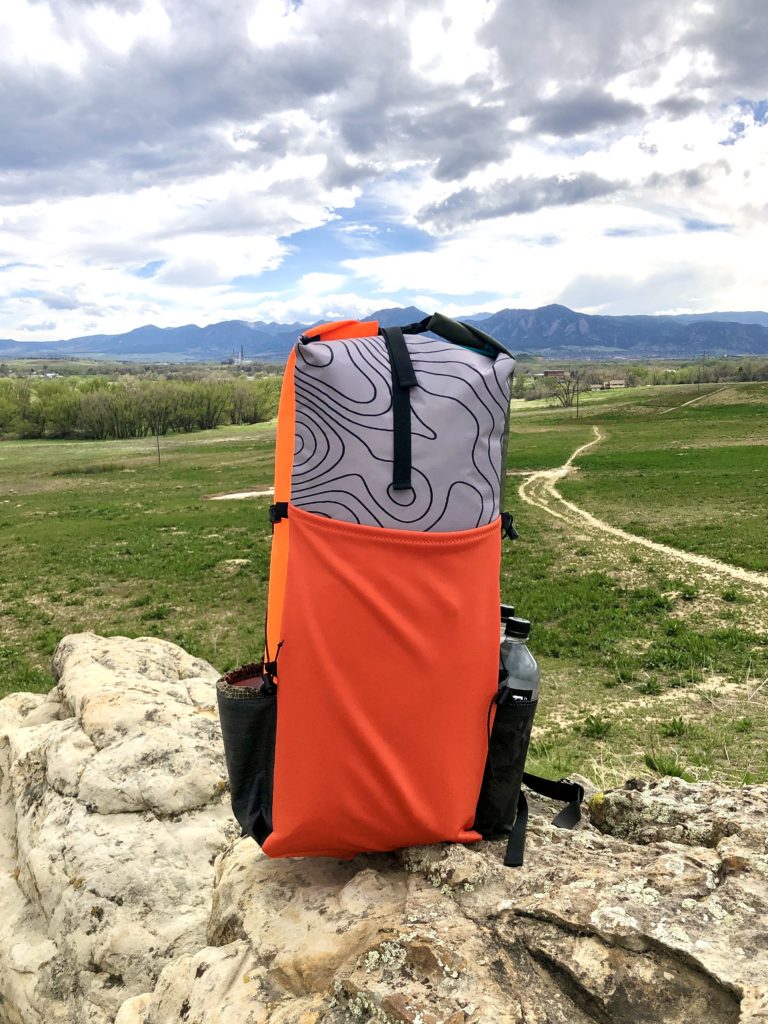
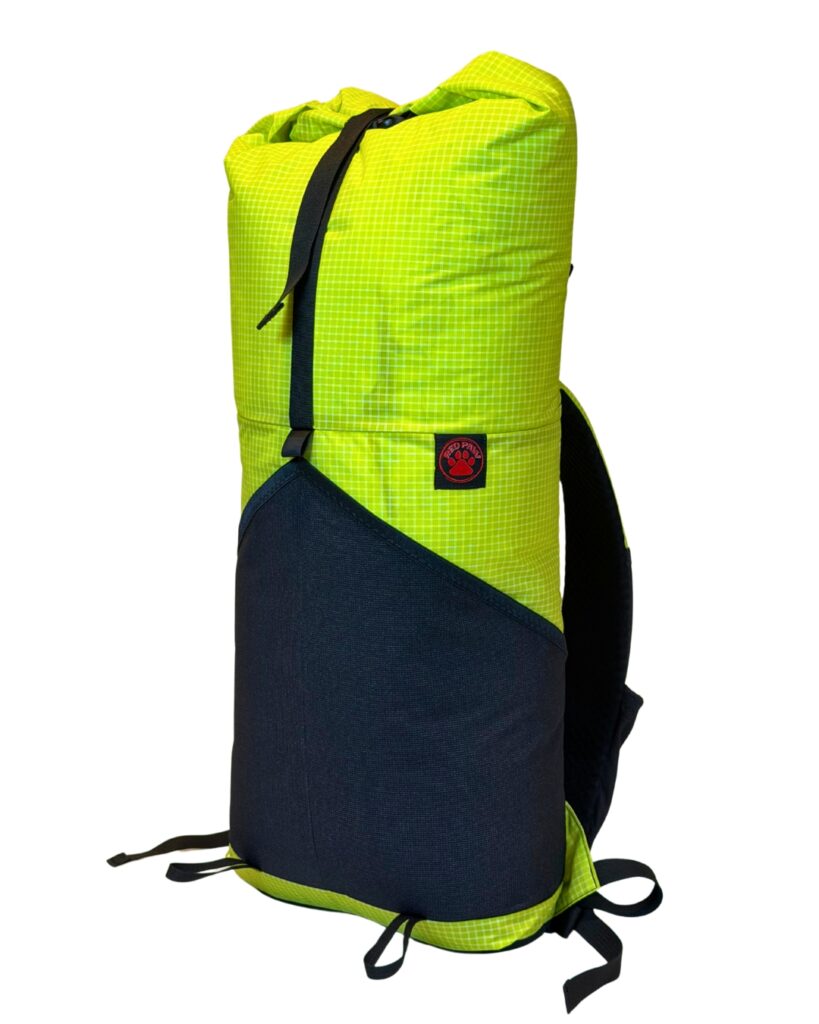
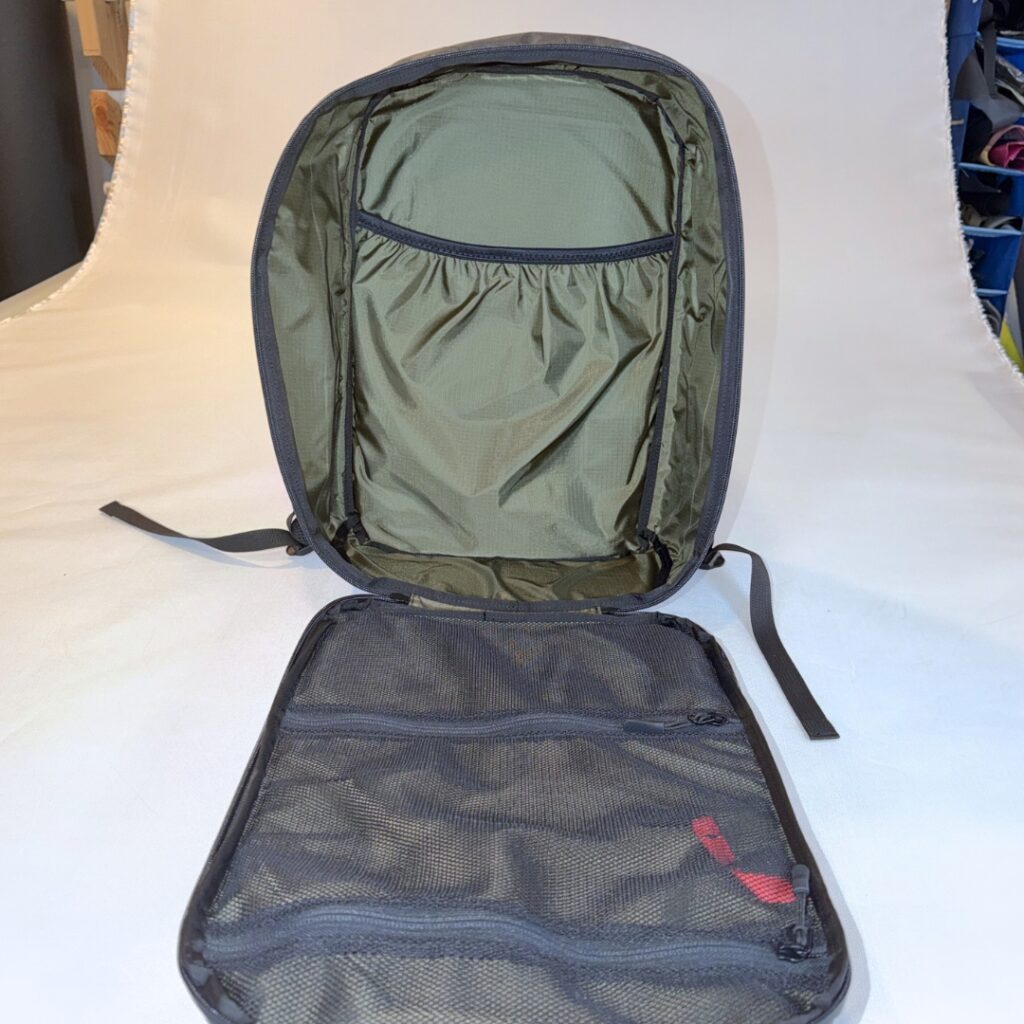
A finished 30L backpack sewn from the pattern
Making your own gear is one of the most rewarding skills an outdoors person can pick up. It saves money, and it teaches you what actually makes a pack carry well on the trail. This sew-along walks through the full build of a 30-liter ultralight backpack, designed from the start as a first backpack project for beginner and intermediate sewists.
Watch the video above to see the pack come together. The pattern download includes the complete 2.5-hour step-by-step tutorial, with tips for getting comfortable with your machine and fixing problems as you go.
What the Finished 30L Backpack Has
Roll-top closure with a buckle across the top
Large front stretch pocket plus a stretch pocket on the bottom
Two side pockets with shock-cord cinches
Top compression strap and shock-cord side compression
Foam-padded shoulder straps with daisy chains and an adjustable sternum strap
Haul handle at the top of the back panel
Removable hip belt that clips onto 1″ webbing loops
Your own torso length, set while you sew
It is a smaller, simplified version of my Front Range 40L. I cut out steps a first-time DIYer doesn’t need and dropped unnecessary pieces to keep the material cost down.
What You’ll Learn
The video covers the complete construction of a functional, trail-ready 30L backpack from scratch:
Material selection: which ultralight fabrics (like X-Pac and DCF) work best for a pack body, and why it matters (see my ultralight fabric comparison for full specs)
Reading and printing a PDF pattern: including how to get accurate scale at a print shop
Seam construction and seam binding: the core techniques for a durable, weather-resistant bag
Installing hardware: buckles, ladder locks, slik clips, webbing, and compression straps
Strap construction: building shoulder straps that are comfortable under a real load
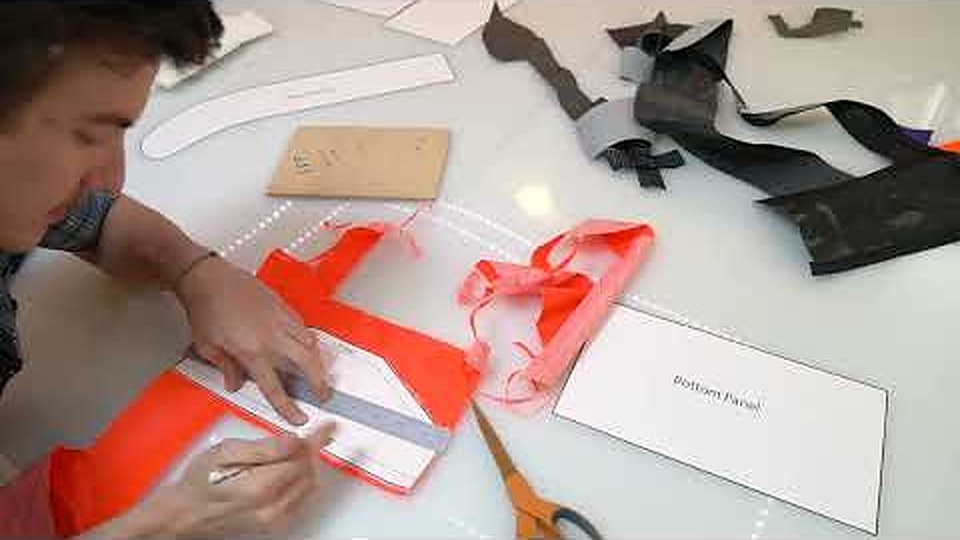
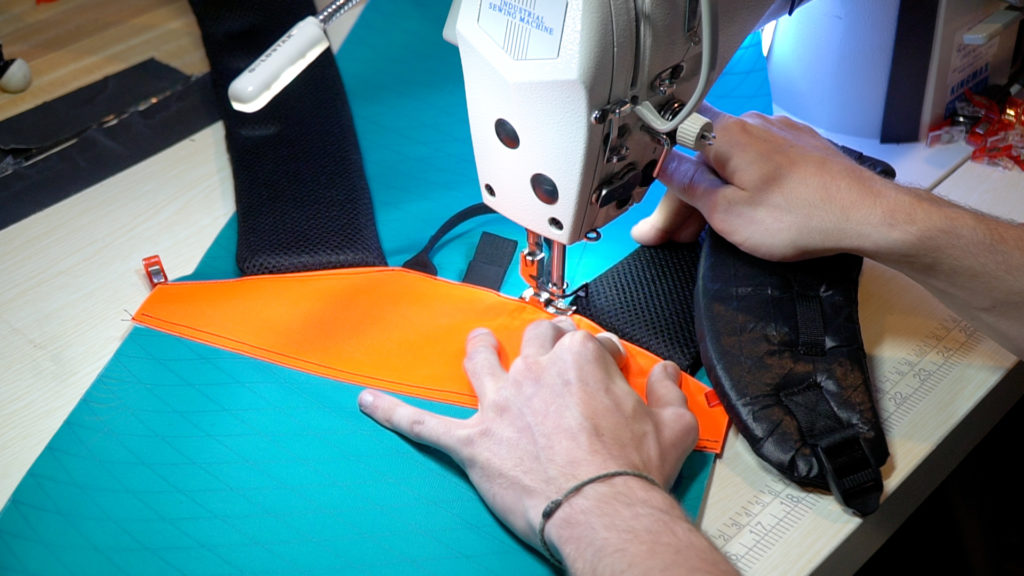
Cutting out pattern pieces in the tutorial video
Materials and Tools You’ll Need
The full cut sheets are in the pattern download. Here is the shopping list, so you can order materials before you start:
Stretch pocket fabric: 0.5–1 yard of Spandura, lycra mesh, or any fabric with 2- or 4-way stretch
Closed-cell foam: one piece about 20″ × 10″, ¼”–½” thick, for the shoulder straps (a foam camping pad works)
3D spacer mesh (optional): the breathable padding on the underside of the shoulder straps
Webbing and cord: ½”, ¾” and 1″ webbing, ¾” grosgrain ribbon, and shock cord
Hardware: a ½” buckle and two MOLLE clips for the sternum strap, ¾” ladder locks and buckles, 1″ slik clips and a dual-adjust buckle for the hip belt, and two cord locks
Tools: most home sewing machines can handle this project. You also need Tex 40 / V46 thread (Gütermann Mara 70 works great), size 16–18 needles, scissors, a chalk pencil or fine marker, a ruler or yardstick, sewing clips, and a lighter to seal webbing ends.
How to Sew a 30L Backpack, Step by Step
The build happens in six stages. The video and the instruction PDF cover each one in detail:
Print and cut the pattern. Print the A0 sheet at a print shop or tile the A4 pages at home. Then trace each piece onto your fabric and cut it out.
Build the side pockets. Sew the cinch channels and shock-cord loops, and fold a pleat at the bottom.
Add the stretch pockets. Sew a stretch pocket onto the bottom panel and a large one onto the front panel, using a zig-zag stitch.
Make the shoulder straps. Sew them, turn them, slide in the foam, then add the daisy chains and sternum strap.
Set up the back panel. Add the strap anchors and hip belt loops, and place the shoulder strap anchor to match your torso length.
Final assembly. Join the panels with a ⅜” seam allowance and reinforce the seams (faux flat-felled or grosgrain binding). Then attach the bottom, turn the pack right side out, and hem the roll top. Finish by adding the buckle and hip belt.
Who Is This For?
This project is built for beginner to intermediate MYOG sewists. If you’ve finished one simple project before, even a tote bag or a stuff sack, you have the foundation for this build. The pattern takes the guesswork out of cutting, and the video goes step by step at a pace you can actually follow at your machine.
Never sewn anything? Start with my free packing cube pattern to learn zippers and basic assembly, then come back to this one.
What First-Time Pack Makers Say
These are reviews from people who bought the pattern:
My first foray into making my own gear. This project has been fairly easy to follow and achieve great results from a complete novice. Highly recommend this project.
Stuart
Clear pattern with directions and the accompanying video tutorial is fantastic.
Paul B.
The video and pattern were a good resource for making my first pack and something to go back to if needed.
Connor
What’s Included With the Pattern
Digital PDF pattern in both A0 and A4 sizes
8 pages of detailed assembly instructions and material suggestions
The complete 2.5-hour step-by-step tutorial video
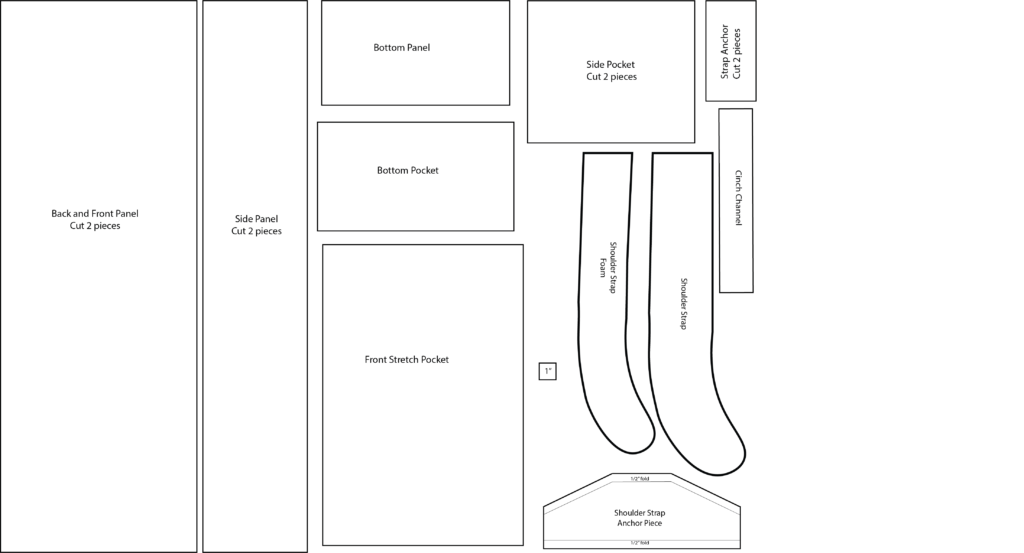
The pattern pieces, laid out on the A0 sheet
Printing tip: print the A0 file at a local print shop (it comes out around 34″ × 46″). It’s cheap, and a single large sheet is far more accurate than taping together dozens of letter-size pages. If you do print at home on A4, check the scale square before you cut anything.
About 1 to 1.5 yards of main pack fabric plus 0.5 to 1 yard of stretch fabric for the pockets. You also need a 20″ × 10″ piece of closed-cell foam for the shoulder straps and short lengths of webbing, grosgrain and shock cord. The pattern has a cut sheet listing every webbing length.
Can I sew an ultralight backpack on a home sewing machine?
Yes. The 30L pattern was designed to be sewn on most home machines. Use Tex 40 / V46 thread and a size 16–18 needle, and go slowly where webbing and straps stack up into thick layers.
What is the best fabric for a DIY backpack?
X-Pac, any ripstop nylon, and DCF all work with this pattern. Ripstop nylon is the cheapest place to start. X-Pac and DCF add waterproofing at a higher price. My ultralight backpack fabric comparison lists weight, waterproofing and strength for each fabric.
Can I print the pattern at home?
Yes. The download includes an A4 version you can print on a home printer and tape together; check the scale square before you cut. For the most accurate pieces, print the A0 file (about 34″ × 46″) at a local print shop.
Can I adjust the torso length?
Yes. You set the torso length while sewing the back panel. Pick your back length (for example 19″), subtract 3″, and place the shoulder strap anchor at that height. The instructions walk you through it.
Does the backpack have a hip belt?
Yes. The hip belt is made from 1″ webbing and clips onto loops at the bottom of the back panel, so you can remove it when you don’t need it. If you would rather have a fixed belt, skip the clips and sew it on.
How is this different from the 30L Alpine Zip pattern?
Both are 30-liter roll-top packs. The 30L Ultralight Alpine Zip pattern adds a zip front and lets you customize the daisy chains, strap placement and torso length. Choose the DIY 30L if you want the classic ultralight style with big stretch pockets.
Whether it’s your first pack or your fifteenth, there’s something uniquely satisfying about stepping onto the trail with something you made yourself. Start here.
— Matt Evans, Red Paw Packs
How to Use the Ultralight Dog Quilt: The Simplest Dog Camping Blanket
Backpacking with a dog is one of the great joys of trail life. But cold nights in the backcountry take the same planning for your dog as they do for you. The Red Paw Packs Ultralight Dog Quilt is the simplest, lightest way to keep your pup warm on the trail: a 4.1 oz synthetic quilt that does the job of a dog sleeping bag at about one-sixth the weight.
It’s exactly what it sounds like: a lightweight, packable quilt made for dogs. It’s not a full sleeping bag, and that’s intentional. Dogs move around at night, regulate their temperature differently than we do, and most won’t stay zipped inside a bag anyway. A simple quilt works better.
Specs at a Glance
Weight: 4.1 oz
Size: 33.5″ long × 27.5″ wide
Fits: dogs about 50–120 lb worn poncho-style; any size dog as a blanket in the tent
Shell: 0.9 oz MEMBRANE 15 ECO ripstop nylon
Insulation: Climashield Apex 2.5 oz synthetic (a medium-warmth insulation), so it stays warm even when wet
Attachment: two String Z buckle and shock cord assemblies, plus extra webbing loops
Price: $105, handmade to order in St. Petersburg, Florida
Will It Fit My Dog?
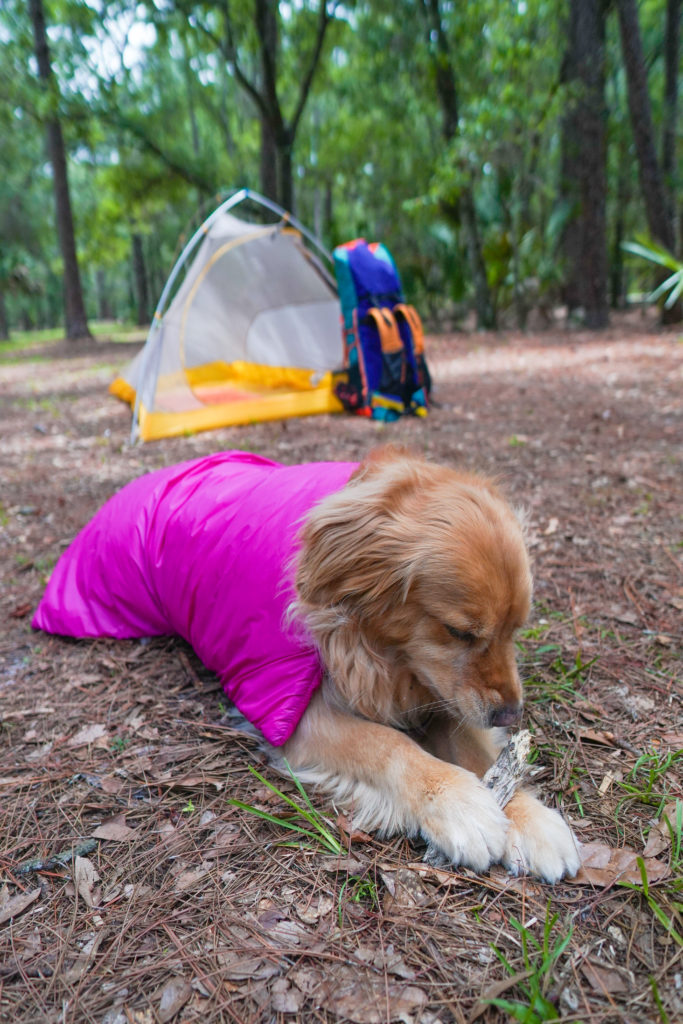
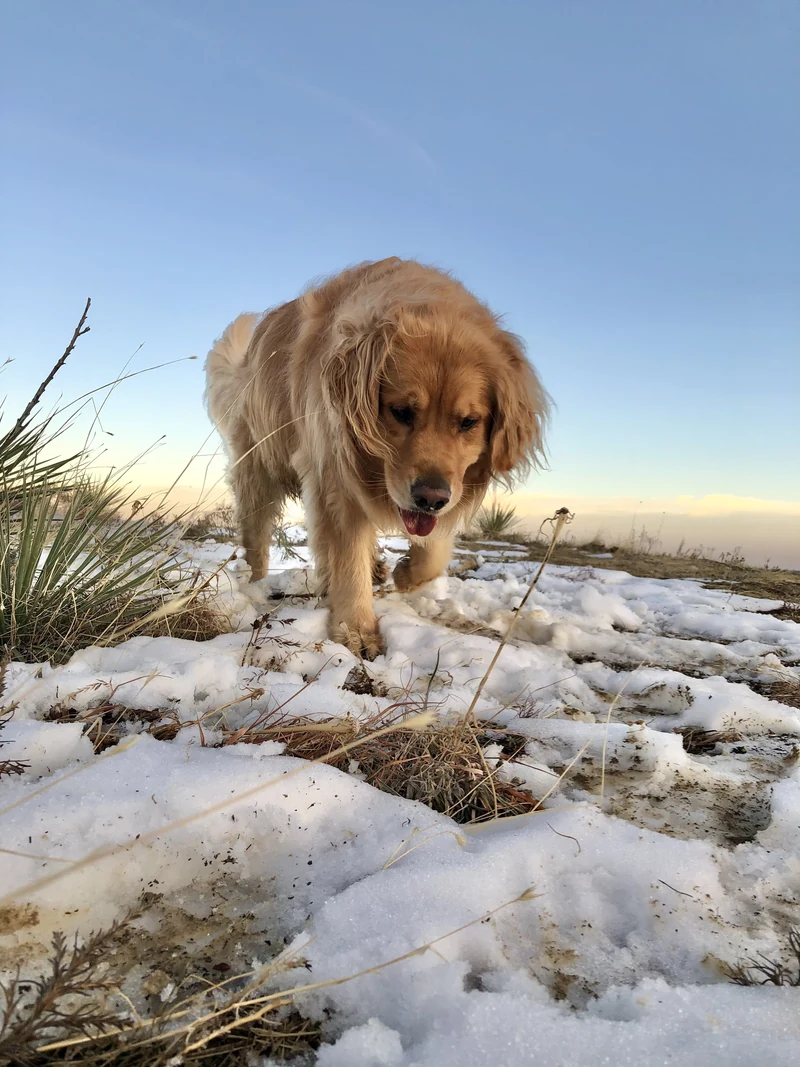
The quilt is 33.5″ long and 27.5″ wide. Worn poncho-style, with one strap around the neck and one around the belly, it fits larger dogs, roughly 50 to 120 lb. My golden retriever Lucy weighs 85 lb and it covers her back and sides comfortably.
Got a smaller dog? It still works great as a blanket at camp. Drape it over them in the tent or tuck them in on their sleeping pad, and there’s plenty of quilt to go around.
How to Use It
Placement: drape the quilt over your dog rather than putting it under them. That’s usually the most effective way to hold in warmth.
Securing it: one buckle-and-shock-cord assembly goes around the neck and the other around the belly. The quilt stays on while your dog walks around camp and doesn’t slide off when they toss and turn at night.
Customizing it: extra webbing loops all over the quilt let you rig it how you like. You can even add shock cord to strap it down to a sleeping pad.
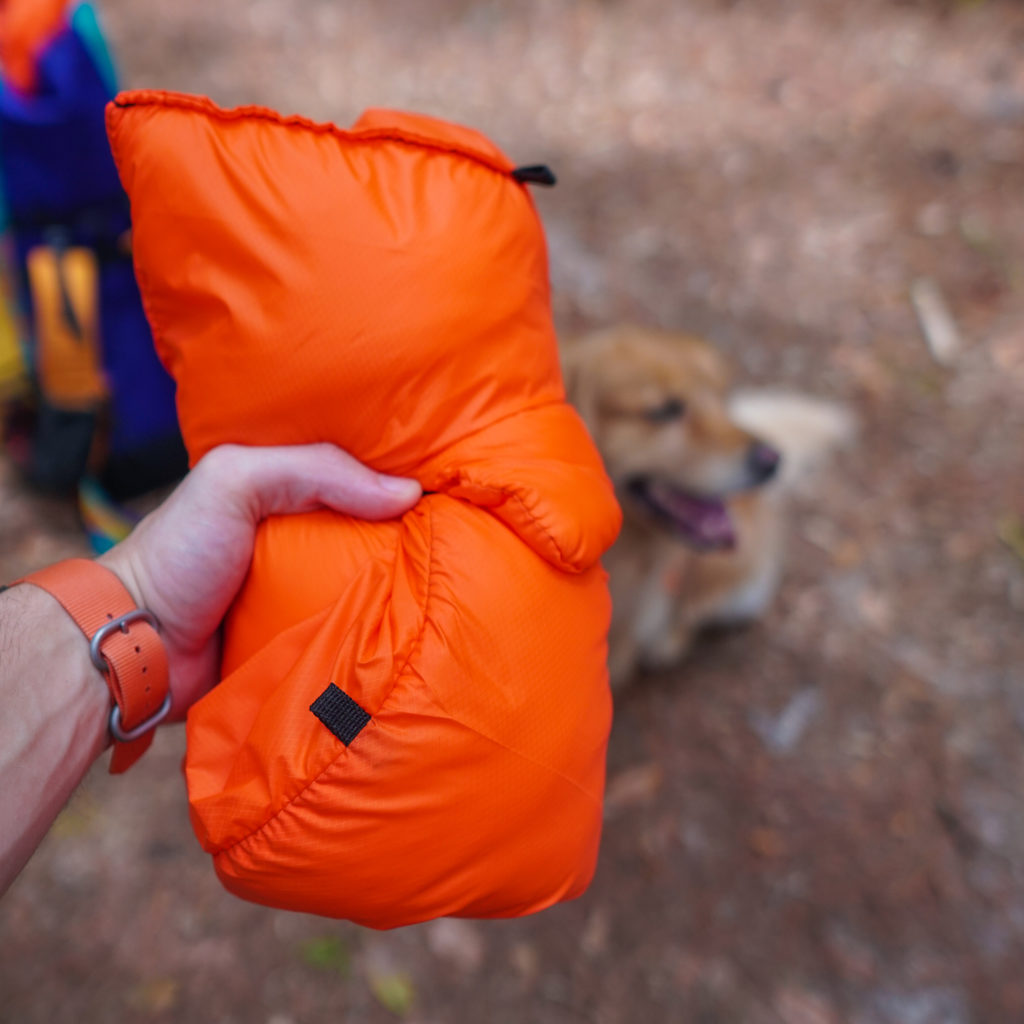
Packing it: the Climashield Apex insulation compresses small, so it takes up very little room in your pack.
Want the quick version? Here’s how to put it on in under a minute:
It packs down small
How Warm Is It? When Does Your Dog Need It?
The quilt uses Climashield Apex 2.5 oz, a medium-warmth synthetic insulation. How warm that feels depends a lot on the dog: breed, coat length and size all matter, so there’s no single temperature rating that fits every dog.
For reference, Lucy has a thick, long coat that keeps her pretty warm on its own. She usually only needs the quilt when temperatures dip below about 50°F, and she’s used it on nights down to 20°F. Short-haired and small dogs will want it sooner and may need more help on the coldest nights.
Because the insulation is synthetic, it keeps insulating when it’s damp. That matters, because dogs come back to the tent wet more often than not.
The quilt is ideal for:
Backpackers who camp with their dogs in spring, fall, winter, or at high altitude
Owners of short-haired or small breeds that lose heat faster
Thru-hikers looking for minimal-weight gear for their trail partner
Dog Quilt vs. Dog Sleeping Bag
The best-known backpacking dog sleeping bag is the Ruffwear Highlands. It’s a good product, but it’s built like a human sleeping bag: a fully enclosed bag with a pad sleeve. Here’s how it compares on paper:
Red Paw Packs Ultralight Dog Quilt
Ruffwear Highlands Sleeping Bag (Medium)
Ruffwear Highlands Sleeping Bag (Large)
Weight
4.1 oz
1.6 lb (about 25.6 oz)
2.2 lb (about 35.2 oz)
Size (flat)
33.5″ × 27.5″
33.5″ × 25.2″
43.3″ × 28.3″
Shell
0.9 oz MEMBRANE 15 ECO ripstop nylon
75D polyester with DWR
75D polyester with DWR
Insulation
Climashield Apex 2.5 oz synthetic
120 g recycled polyester
120 g recycled polyester
Stays on a moving dog
Yes, neck and belly straps
No, it’s a bag
No, it’s a bag
Price
$105
$109.99
$109.99
Ruffwear specs and price as listed on ruffwear.com in October 2026.
The Medium Highlands has almost exactly the same footprint as the Dog Quilt but weighs more than six times as much. A sleeping bag makes sense if you’re car camping or your dog sleeps curled up in one spot all night. If you’re counting ounces, or your dog gets up and wanders the campsite, the quilt is the better tool. It also doubles as a camp jacket, because it stays strapped on.
What Owners Say
“It’s light, easy to adjust and it kept my pup nice and warm throughout a night at 32 degrees (0 Celsius) without falling off.”
Federico, verified owner ★★★★★
“I love this blanket, and so does my dog. She is usually damp when we sleep, and in the shoulder season this will be helpful to lock in the heat… I really appreciate that I can clip it to her, or around her dog bed (cut up Zrest) to keep it in place.”
Mimi B., verified owner ★★★★★
“After using all sorts of dog blankets I think we’ve found the one. The ultralight dog quilt is the perfect size and weight and our dog enjoys wearing it knowing that it’s her quilt and it’s going to keep her warm.”
Kevin, verified owner ★★★★★
Tested by Red Paw Herself
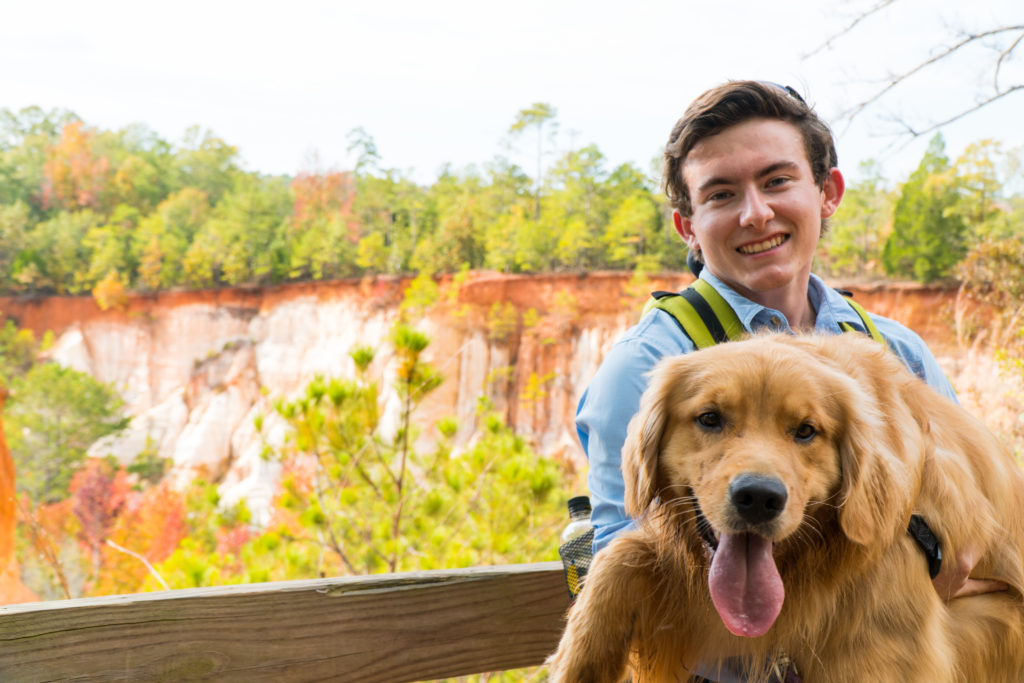
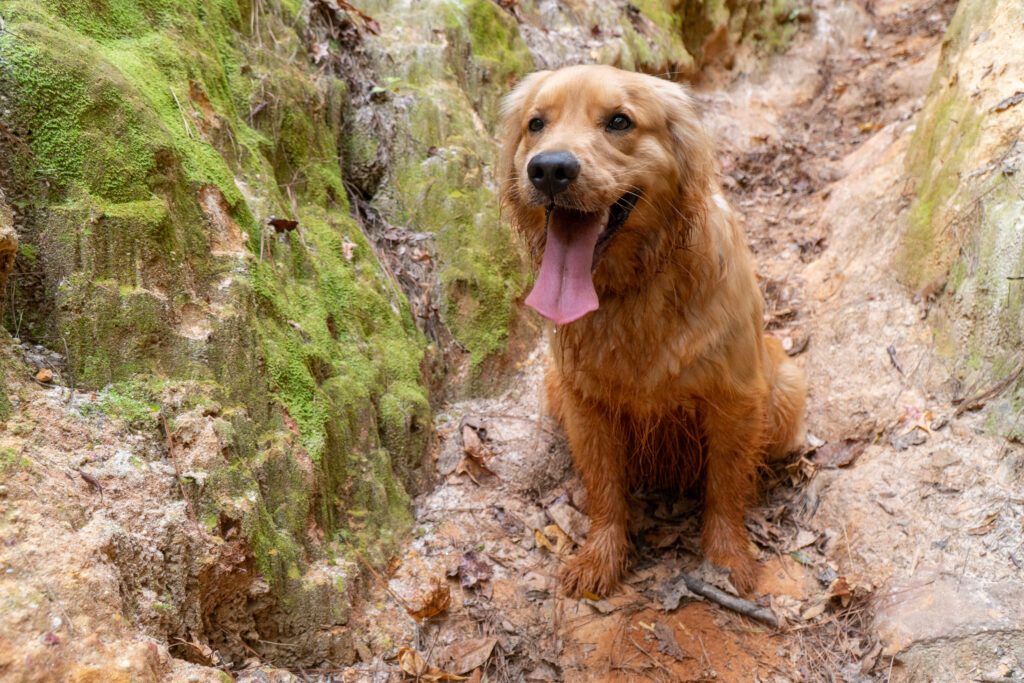
Red Paw Packs is named after Lucy, who earned the trail name “Red Paw” on a hike through Providence Canyon, Georgia. Dog gear is close to my heart, and the Dog Quilt shows it. It’s been tested on a lot of nights on the trail with Lucy. It’s one of the few things she’s happy to see me pull out of my pack when we get to camp. She knows it’s going to keep her warm and comfortable after a long day.
Matt and Lucy, aka Red Paw
Care
When the quilt picks up that funky wet-dog smell (and it will), hand wash it in lukewarm water with a tech or performance wash, drain it, and hang it to dry.
Frequently Asked Questions
Does my dog need a sleeping bag for backpacking?
On cold nights, most dogs benefit from extra insulation, especially short-haired or small breeds and any dog that’s wet from the trail. It doesn’t have to be a full sleeping bag, though. A lightweight quilt like the 4.1 oz Ultralight Dog Quilt keeps a dog warm for a fraction of the weight, and it stays on even when the dog moves around.
At what temperature does a dog need a blanket when camping?
It varies from dog to dog with breed, coat and size. Lucy, an 85 lb golden retriever with a thick long coat, usually only needs her quilt below about 50°F, and she has used it down to 20°F. Short-haired and small dogs need warmth sooner. Watch for shivering, curling up tightly, or trying to get into your sleeping bag.
What size dog does the Ultralight Dog Quilt fit?
The quilt measures 33.5″ × 27.5″. Worn poncho-style with the neck and belly straps, it fits dogs of about 50 to 120 lb. Used as a blanket in the tent, it works for any size dog.
Does the dog quilt stay warm when wet?
Yes. The insulation is Climashield Apex 2.5 oz, a continuous-filament synthetic that keeps insulating when damp, unlike down. The shell is 0.9 oz MEMBRANE 15 ECO ripstop nylon.
How does the quilt stay on my dog at night?
Two String Z buckle and shock cord assemblies go around the neck and the belly, so it stays on while your dog walks around camp or tosses and turns. Extra webbing loops let you add shock cord to strap it to a sleeping pad instead.
How much does the Ultralight Dog Quilt weigh and cost?
It weighs 4.1 oz and costs $105. It’s handmade to order by Red Paw Packs in St. Petersburg, Florida, in six colors.
How do I wash a dog quilt?
Hand wash it in lukewarm water with a tech or performance wash detergent, drain the water, and hang it to dry.
Your Fanny Pack vs. Ours: What Makes the Flex Fanny Pack Different
Most fanny packs are made to hit a price point, not a performance standard, and they don’t solve any real problem. The materials are heavier than they need to be, the zippers are generic, the pockets are an afterthought, and the strap gets uncomfortable after 20 minutes. Hold a Red Paw Packs Flex Fanny Pack next to one of those and the difference is immediate.
The Flex Fanny Pack
This video is a direct comparison: your standard fanny pack vs. ours.
https://www.youtube.com/shorts/D61vtC5cp3Y
What the Flex Fanny Pack Actually Is
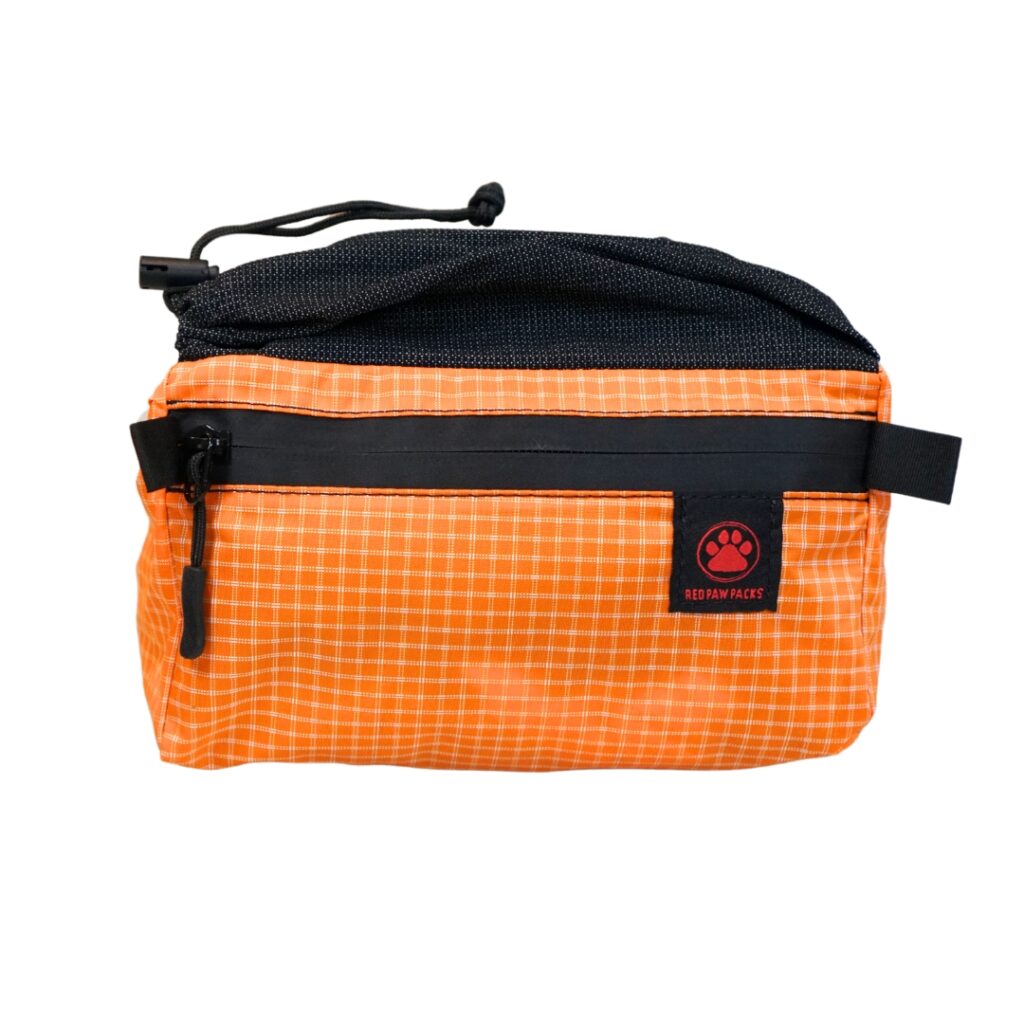
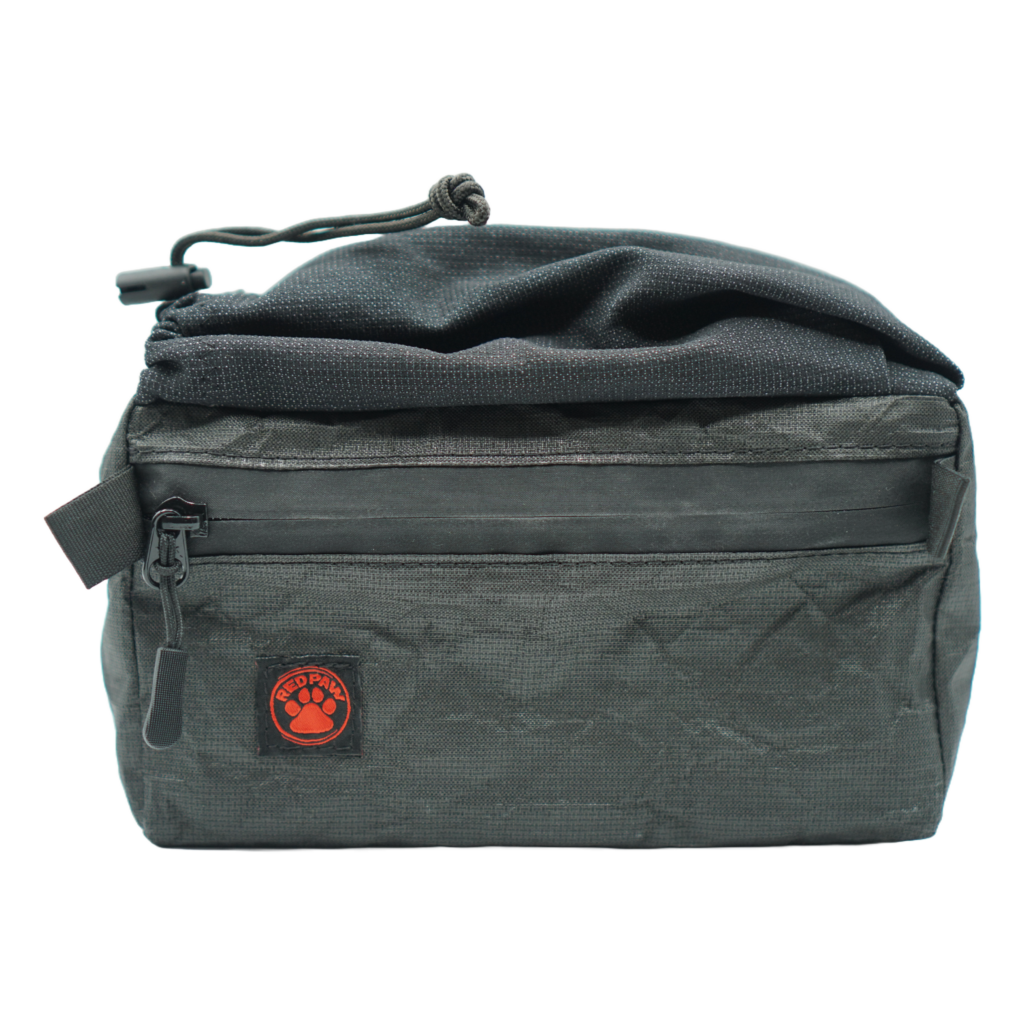
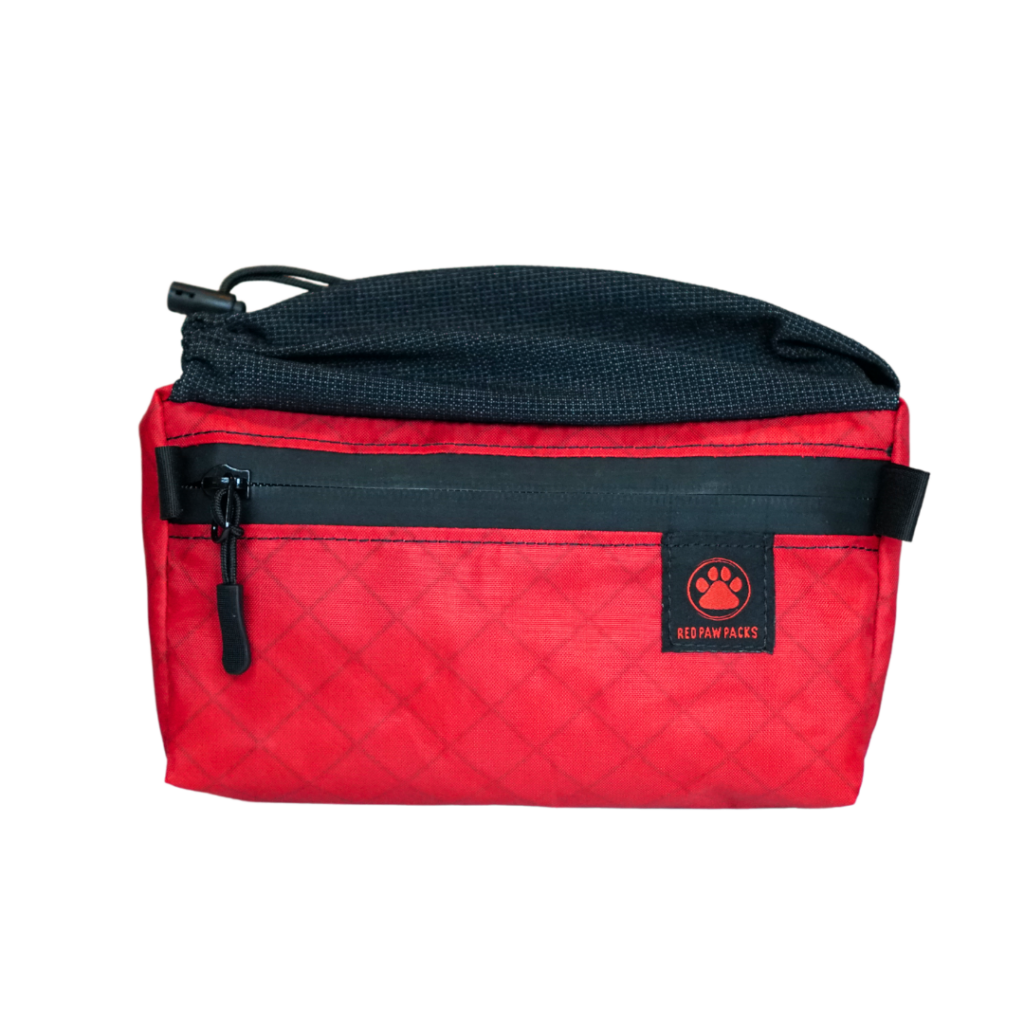
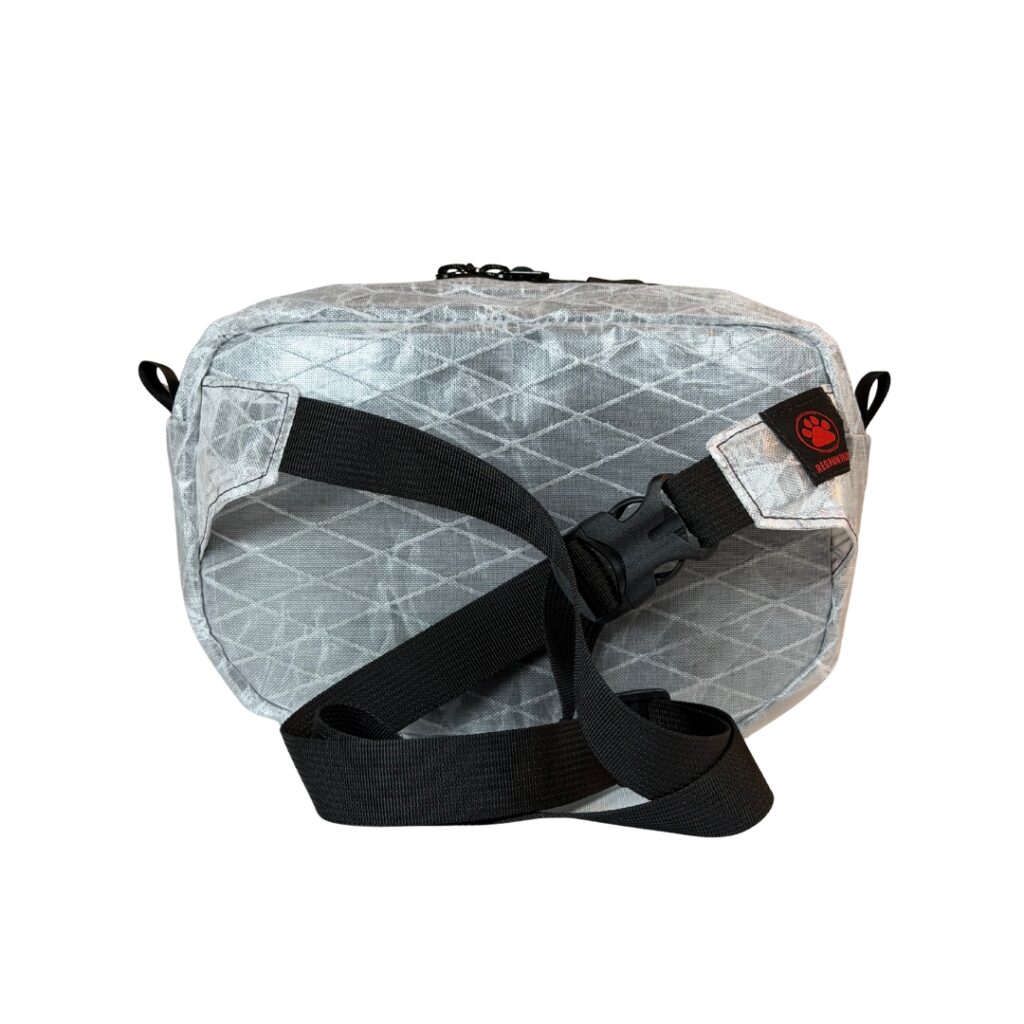
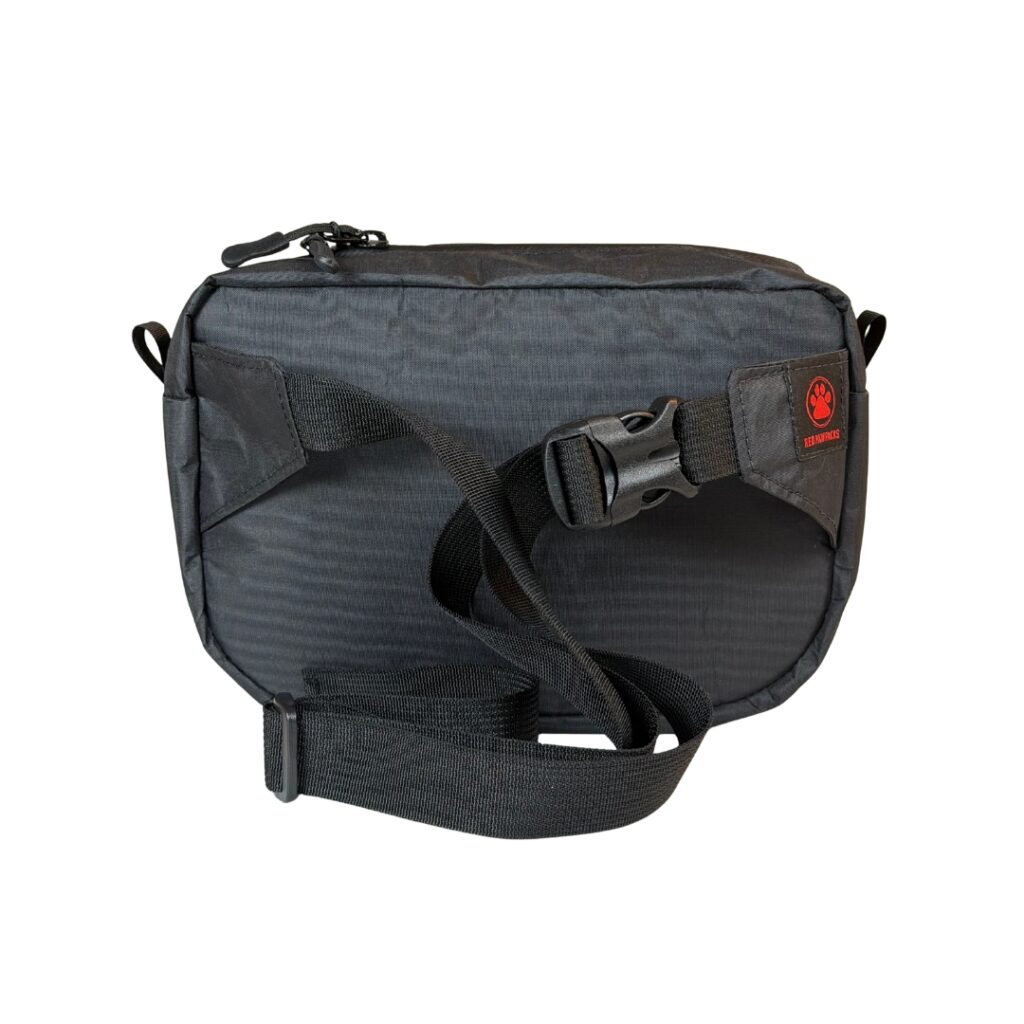
The Flex Fanny Pack gives you versatility whether you’re hitting the town or hitting the trail. It’s made from ultralight, waterproof, durable fabric and built to last.
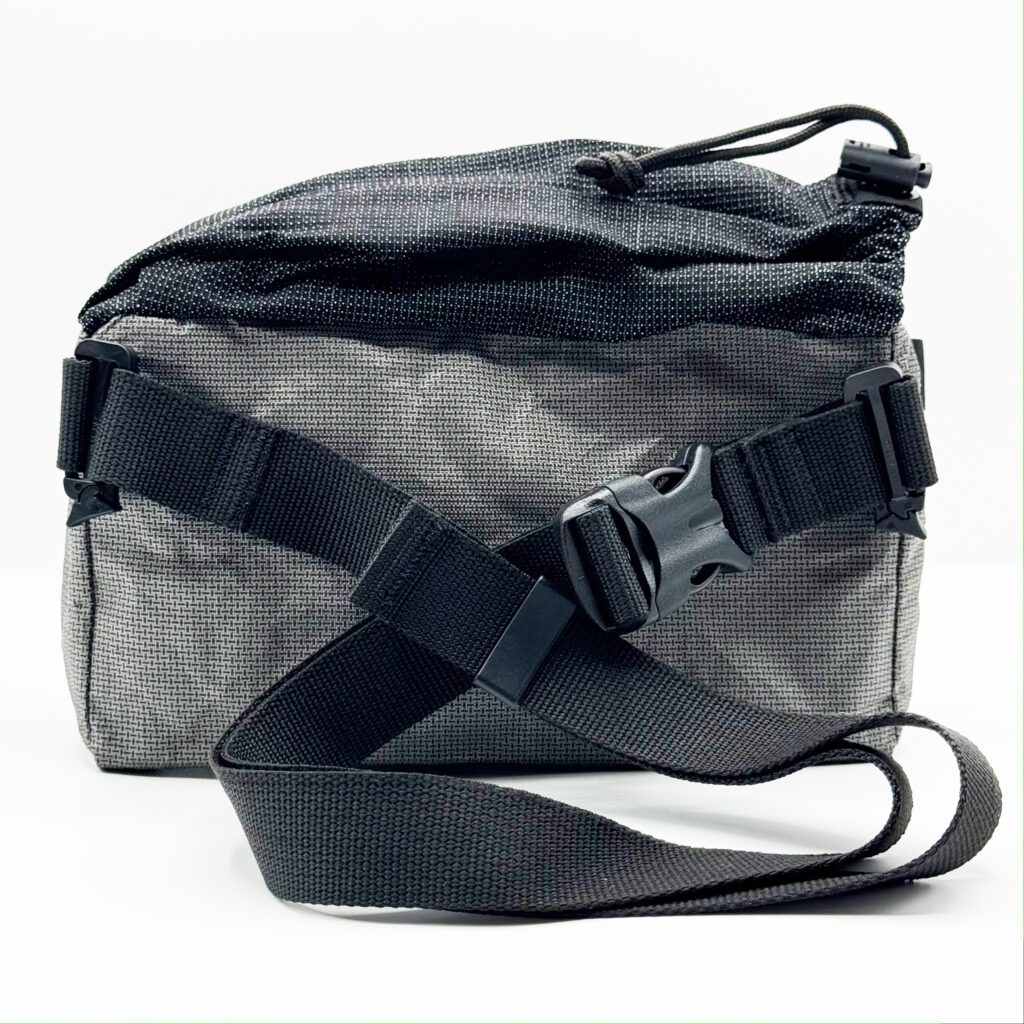
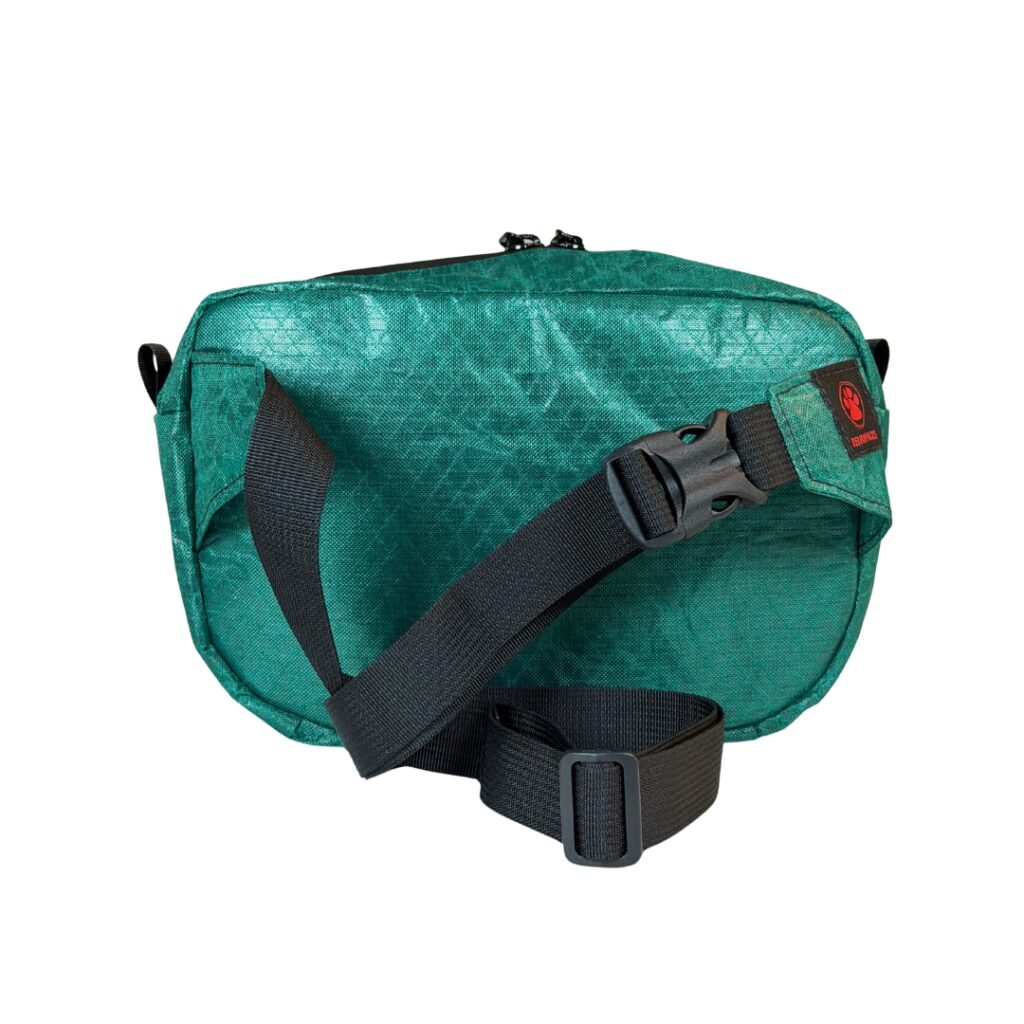
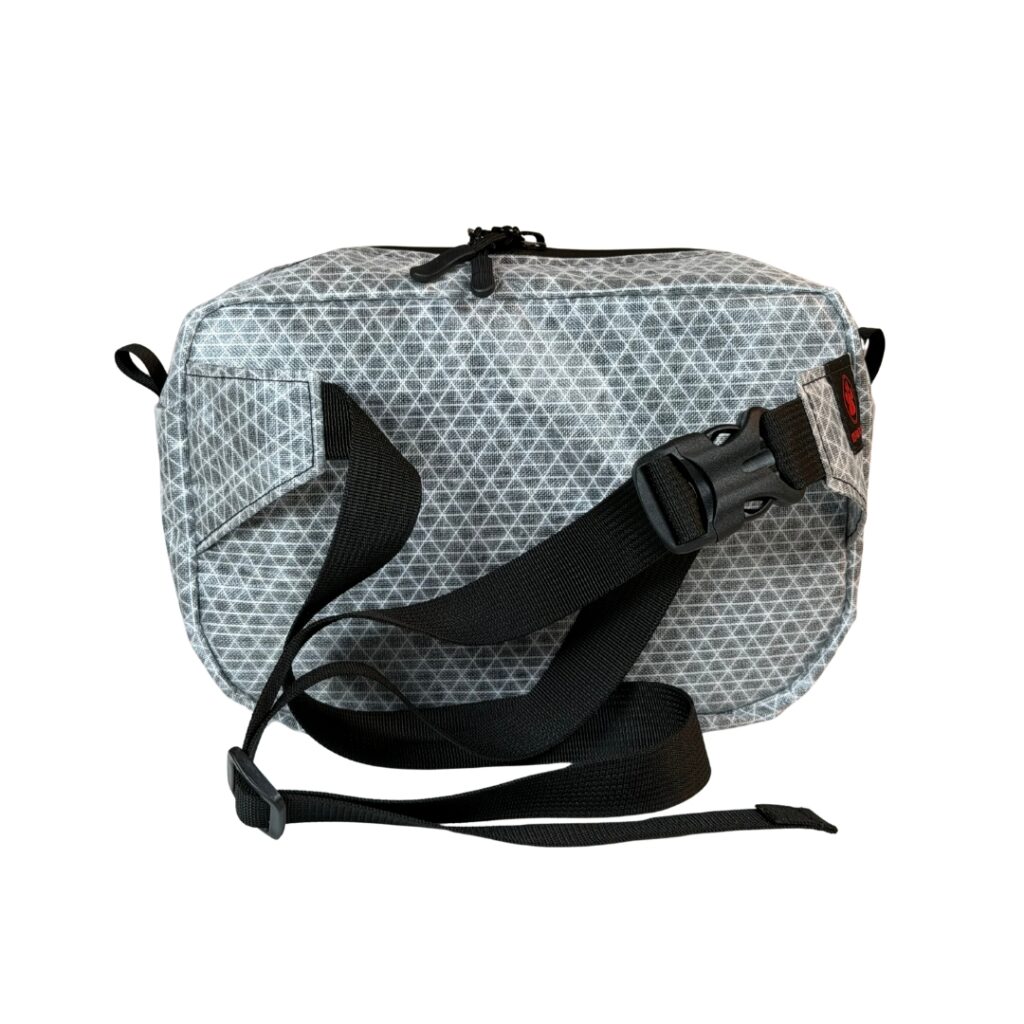
Weight: about 3.6 oz including the hipbelt (3.4–3.7 oz depending on fabric)
Size: 8″ long × 3″ deep × 4.25″ tall
Zipper: #5 YKK waterproof, matte black
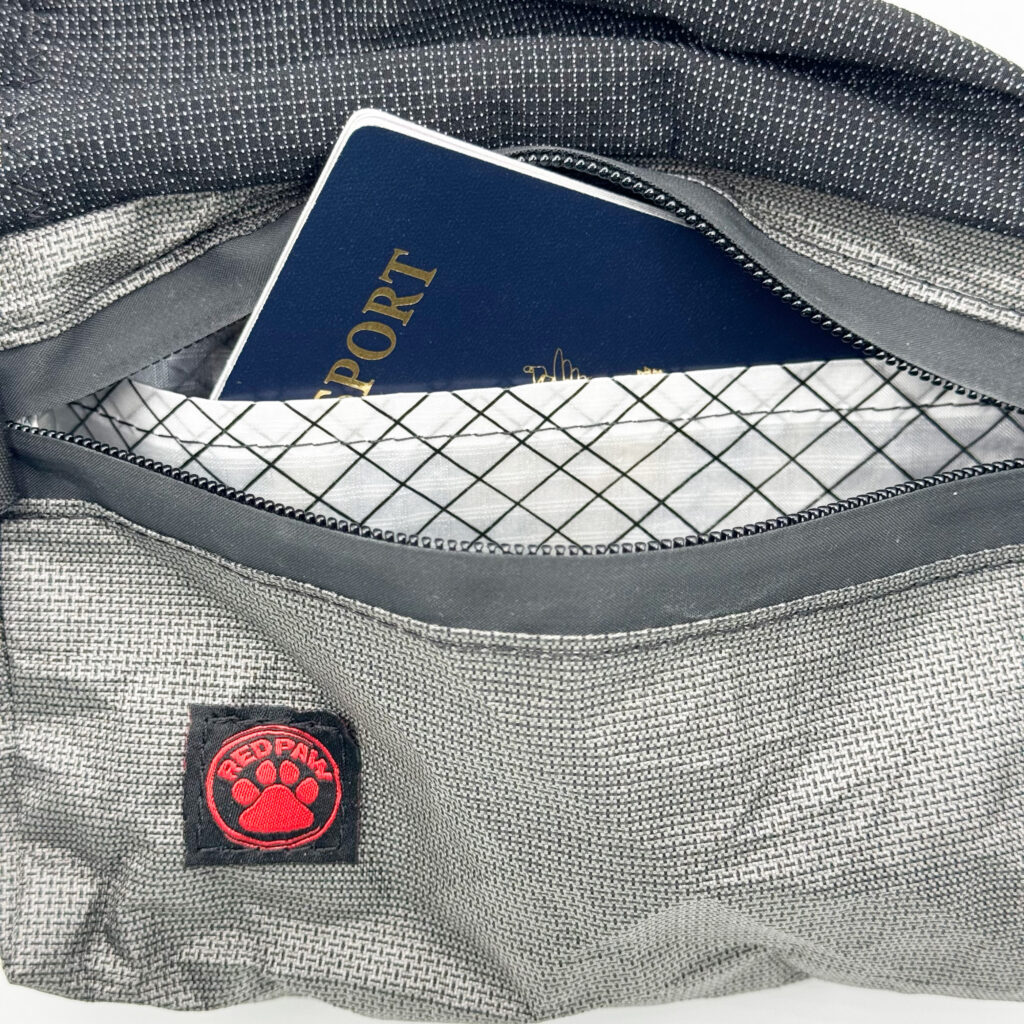
Interior phone pocket to keep your phone separate from everything else
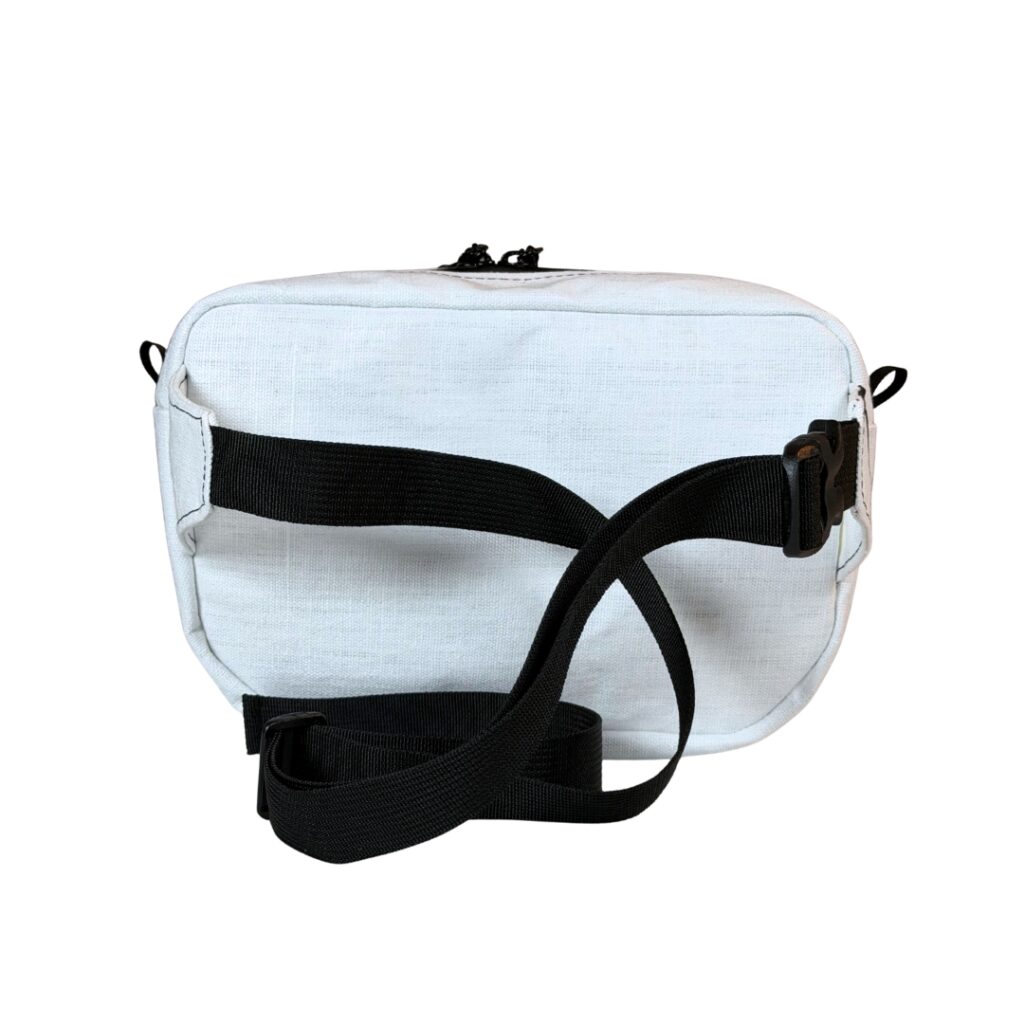
Removable 1″ hipbelt with Slik Clips, so you can clip the pack straight onto your backpack’s hipbelt
Seam-sealed on Ultra 200/400 and TX50 versions
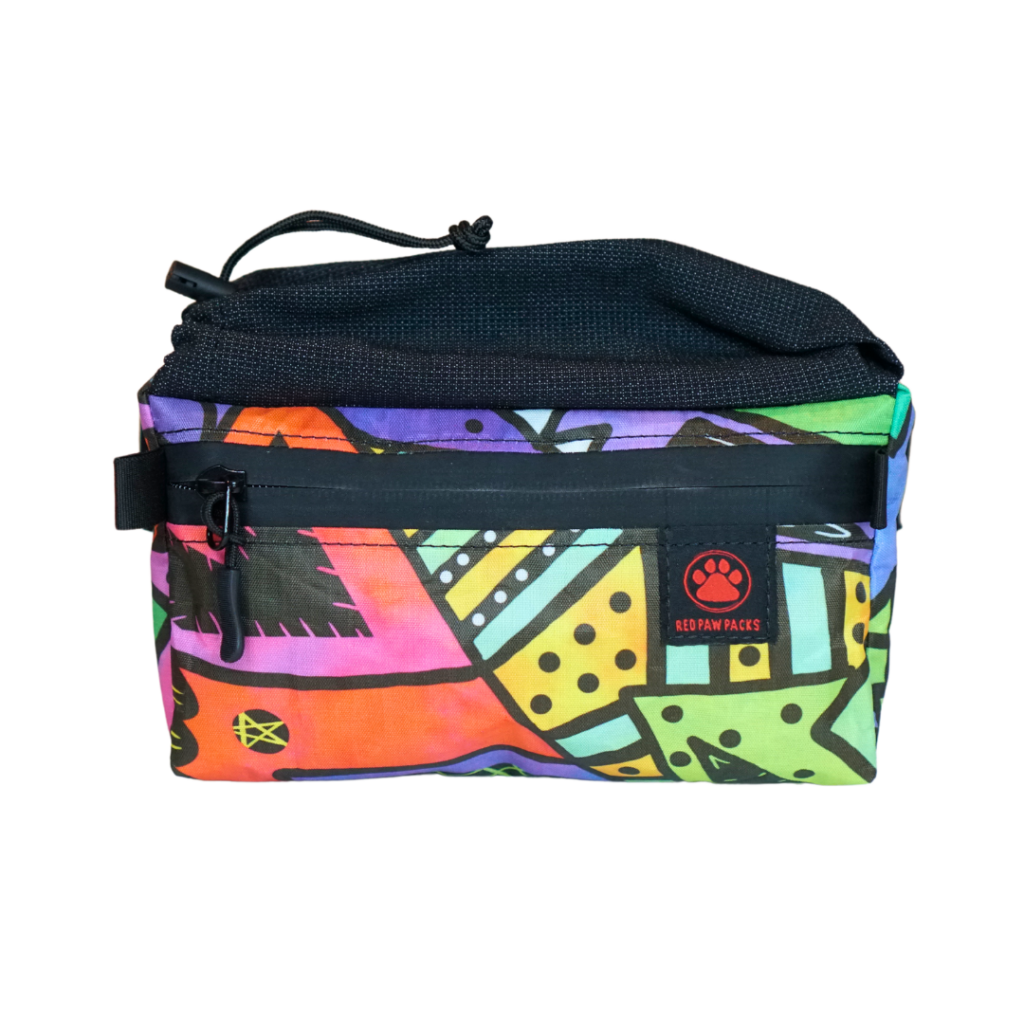
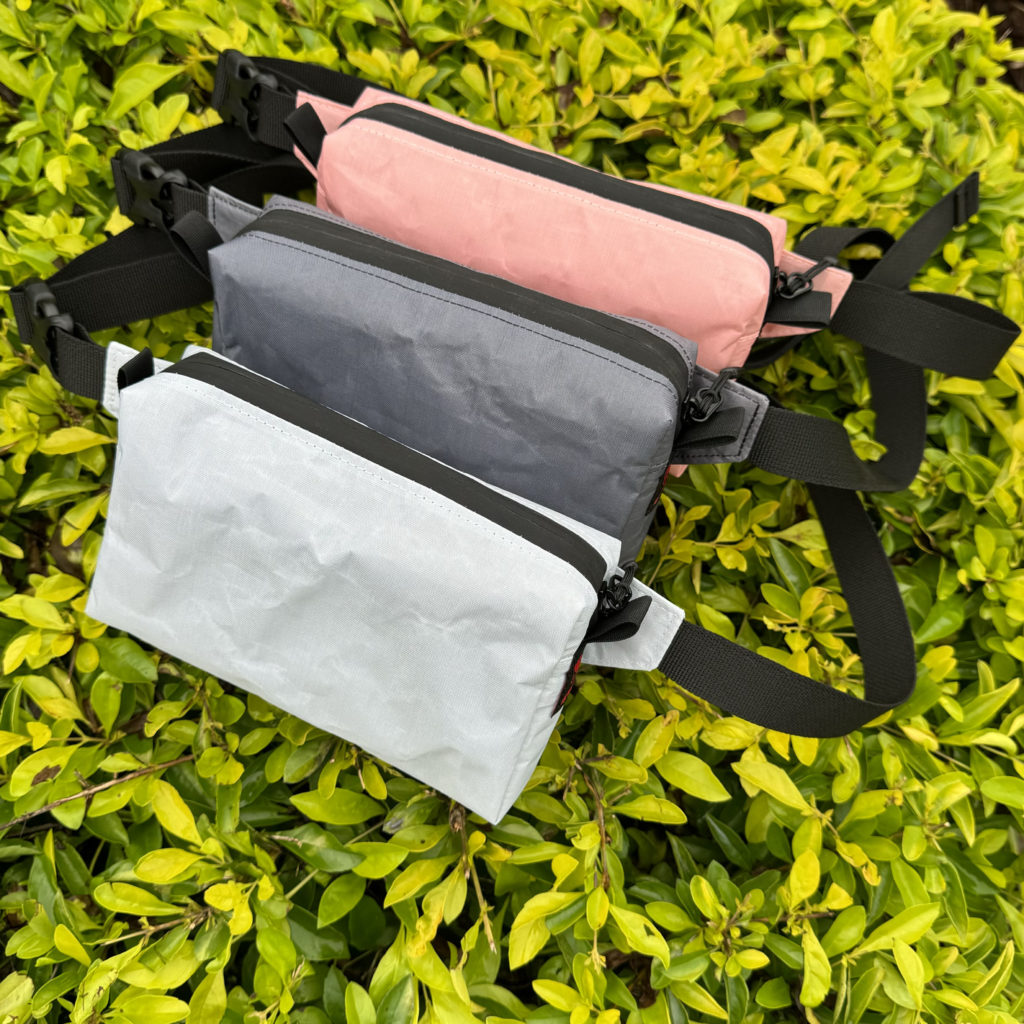
Fabric options including Ultra 200X, Ultra 400, ECOPAK EPX 200, VX21, TX50, and many more
The interior pocket
The Stretchy Top Pocket
The Flex Fanny’s signature feature is the Venom stretch mesh “flex pocket” on top. It holds a 500–700 ml water bottle, snacks, sunglasses, or anything else you want to grab without unzipping. Mass-market fanny packs just don’t have this.
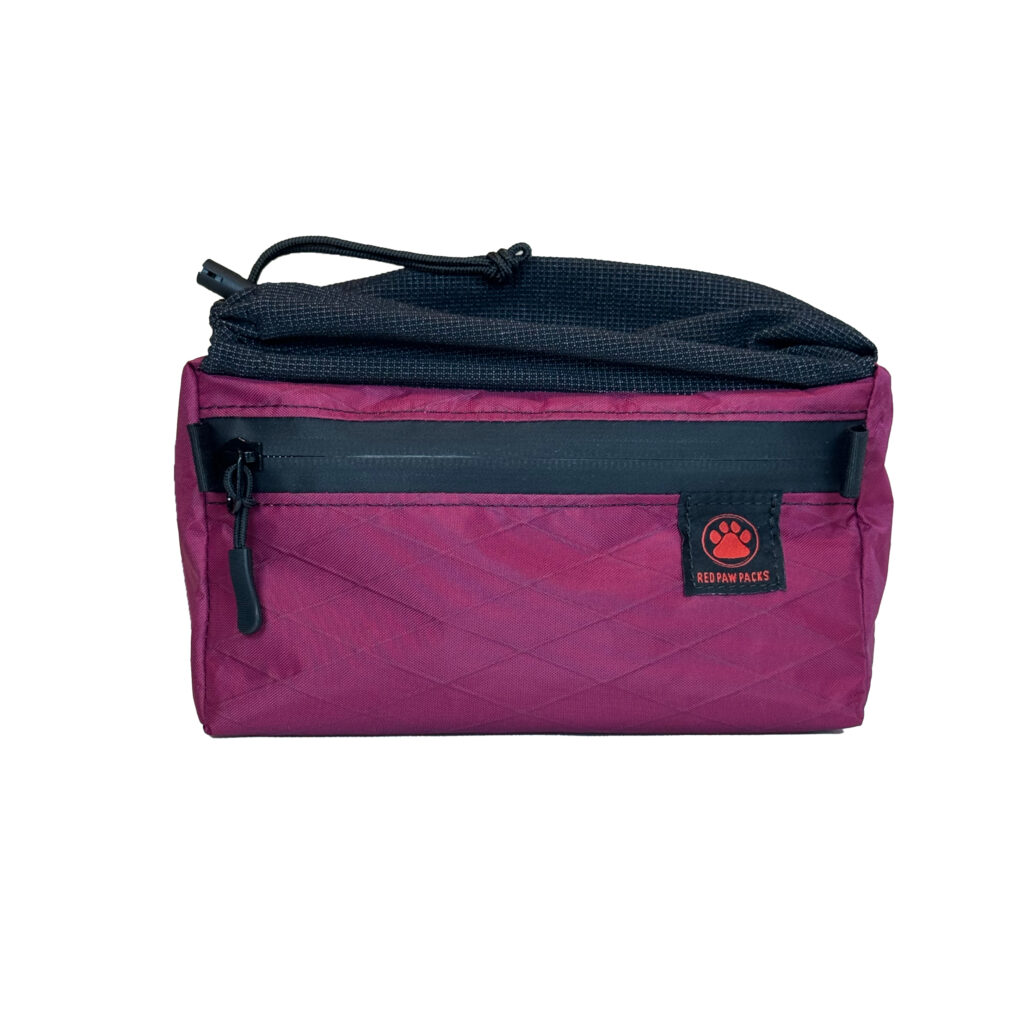
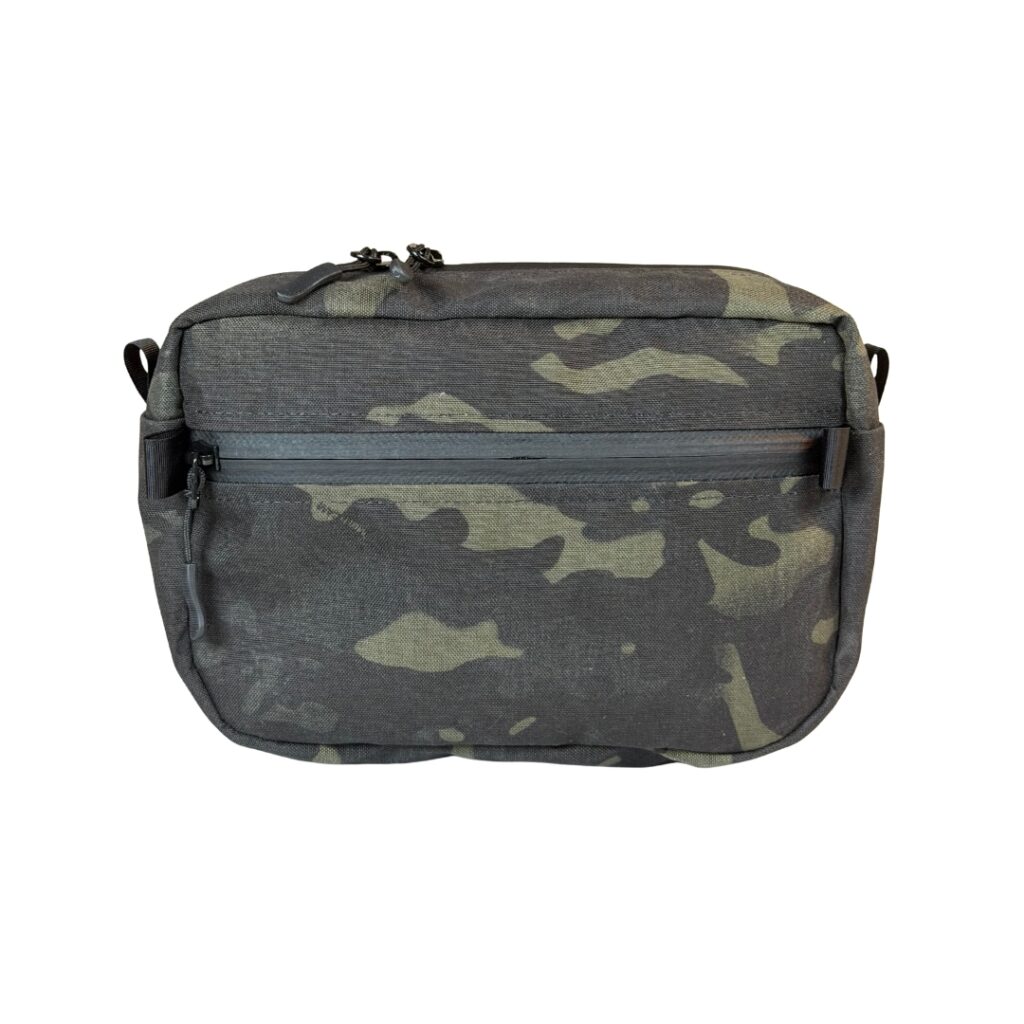
One of many fabric options
Built by the Person Who Designed It
The Flex Fanny was our first product design, and it has stayed largely unchanged for good reason. It has all the features you want and nothing you don’t. When your pack ships, it was built by the same person who designed it, someone who can tell you why every seam is where it is.
Proven Everywhere
Customers have taken the Flex Fanny on all the major US thru-hikes, including the Appalachian Trail, Pacific Crest Trail, and Continental Divide Trail. It’s been to New Zealand, Australia, and Japan, through ultramarathons, long shifts in the emergency room, and ecological fieldwork. We’ve sent a Flex Fanny to every continent except Antarctica.
The removable hipbelt
The consistent feedback: the quality holds up under real use in a way store-bought alternatives don’t.
From Town to the Grand Canyon
Because it’s so small and light, the Flex Fanny fits into almost any kind of trip. Wear it around town as a daily carry. Clip it to your backpack’s hipbelt on a thru-hike so your phone, snacks, and water are always in reach. Sling it across your chest on a trail run, a bike ride, or a day at a festival. If something will fit in it, you can bring it.
Then there’s the extreme end. Jonathan, aka Meow Hikes, went backpacking in the Grand Canyon carrying only a Flex Fanny Pack. That meant no backpack, just the essentials packed into one ultralight hip pack, in one of the most rugged landscapes in the country. It’s a crazy, inspiring trip and a great example of how far a well-built fanny pack can go. Watch the whole adventure here:
Ultralight Backpack Fabrics Compared: Ultra 200X vs UltraGrid vs X-Pac vs DCF (Full Specs Chart)
Every pack, fanny pack and sling I sell at Red Paw Packs is sewn from one of about fifteen technical fabrics, and the fabric you pick changes how much your gear weighs, how waterproof it is and how long it lasts. This guide puts all of them side by side: Challenge Ultra 200X, UltraGrid and ECOPAK EPX200, X-Pac VX21, VX25 and UX10, Dyneema Composite Fabric (DCF) Hybrid, Venom Gridstop ECO, ROBIC nylon, and the mesh and lining fabrics I use. The specs come straight from each manufacturer’s published data, with links so you can check them yourself.
I’m Matt, the one-person maker behind Red Paw Packs in St. Petersburg, Florida. I have cut and sewn every one of these fabrics into real packs, so alongside the numbers you’ll find what each one is actually like to live with on the trail and around town. Last updated: October 2026.
Some links in this post are affiliate links to Ripstop by the Roll. If you buy fabric through them, I earn a small commission at no extra cost to you. I only link fabrics I actually sew with.
Quick answer: which fabric should you choose?
Best all-around ultralight pack fabric: Ultra 200X. 4.6 oz/yd², waterproof laminate, and the highest published abrasion score in this guide (4,400 Taber cycles).
Best tear resistance for the weight, with lots of colors: UltraGrid. 4.3 oz/yd² recycled nylon with a UHMWPE grid that Challenge lists as “does not tear.”
Classic structured waterproof fabric: X-Pac VX21. A laminate rated to 200+ psi, stiff enough to hold a clean shape.
Lightest options: X-Pac UX10 (about 2.5 oz/yd²) and DCF Hybrid 2.92. Best for small bags like slings and pouches.
Custom prints: DCF Hybrid 5.0, which can be printed through OutdoorINK, like the Coloring Book pattern.
Everyday-carry look: EPX200, 210D ROBIC or waxed canvas on the Scrambler 17L.
Ultralight pack fabric comparison chart
Weights are fabric weight per square yard, not the weight of a finished pack. Abrasion is the number of cycles in the ASTM D3884 (Taber) test, and tear strength is ASTM D2261 (tongue tear) for warp and fill (X-Pac doesn’t name its tear method), as published by each manufacturer. “Not listed” means the maker doesn’t publish that number.
Fabric (maker)
Weight
Waterproofing
Abrasion
Tear (warp / fill)
Ultra 200X (Challenge)
4.6 oz/yd² (155 gsm)
Laminate, 200 psi (ULTRA line)
4,400 cycles
103.1 / 133.2 lb
UltraGrid (Challenge)
4.3 oz/yd² (146 gsm)
1,500 mm PU coating
1,100 cycles
Does not tear
EPX200 (Challenge ECOPAK)
6.4 oz/yd² (216 gsm)
Laminate (rating not listed)
500 cycles
33.1 / 34.6 lb
VX21 (X-Pac)
6.2 oz/yd² (210 gsm)
200+ psi
500 cycles
24.4 / 17.2 lb
VX25 / RVX25 (X-Pac)
7.9 oz/yd² (269 gsm)
200+ psi
2,000 cycles
21.6 / 19.3 lb
UX10 (X-Pac)
About 2.5 oz/yd² (85 gsm)
200+ psi
500 cycles
61.8 / 50.4 lb
DCF Hybrid 5.0 (Dyneema®)
5.0 oz/yd² (169.5 gsm)
100% waterproof
Not listed
Not listed
DCF Hybrid 2.92 (Dyneema®)
2.92 oz/yd² (about 100 gsm)
100% waterproof
Not listed
Not listed
210D Venom™ Gridstop ECO (RBTR)
About 4.5 oz/yd² (151 gsm)
PU coated back
Not listed
Not listed
210D ROBIC® Ripstop (RBTR)
About 4.4 oz/yd² (125 gsm)
UTS coated back
Not listed
Not listed
Ultra TenX (Challenge)
About 2.92 oz/yd² (99 gsm)
0.75 mil PET film (waterproof)
Not listed
Not listed
X50 (X-Pac)
9.3 oz/yd² (315 gsm)
200+ psi
2,000 cycles
38.5 / 32.6 lb
RBTR = Ripstop by the Roll. Full construction details for each fabric are in its section below.
Challenge Ultra 200X
Ultra 200X is a 4.6 oz/yd² waterproof laminate with a 200-denier face woven from UHMWPE (ultra-high-molecular-weight polyethylene, the same family of fiber as Dyneema®) blended with high-tenacity polyester. An Ultra-PE CrossPly and a 0.75 mil film sit behind the face. Challenge calls it “our most popular UltraWeave style,” and it has the best published abrasion resistance of any fabric in this guide.
Ultra 200X is my default recommendation for a thru-hiking pack: light, waterproof, and it shrugs off rock and brush. It has a crisp, slightly papery hand and holds its shape well. It tends to start out stiff and quickly loosens up and gets softer as the bag gets used..
Spec
Manufacturer value
Construction
200d face Ultra-PE blended with high-tenacity polyester; Ultra-PE CrossPly; 0.75 mil film backing
Weight
4.6 oz/yd² (155 gsm)
Width
58 in (147 cm)
Tear strength (ASTM D2261)
Warp 103.1 lb, fill 133.2 lb
Abrasion (ASTM D3884)
4,400 cycles
Waterproof
Challenge rates its ULTRA fabric line waterproof to 200 psi
Manufacturer colors
White Lightning, Silverado, Storm Grey, Gravel Grey, Black Magic
Where I use it: Front Range 40L and Flatiron 28L body panels (Black, White, Gray), Scrambler 17L exterior, Flex Fanny Pack, Hipbelt Pockets.
Challenge UltraGrid
UltraGrid is a 4.3 oz/yd² recycled 210-denier nylon reinforced with a 5 mm double grid of 200-denier Ultra (UHMWPE) yarn, finished with a 1,500 mm PU coating and a fluorocarbon-free C0 DWR. Challenge lists its tear strength simply as “does not tear.” It is lighter than a lot of the laminates, including X-Pac VX21 and Ultra 200X and comes in more colors than any other fabric I offer.
UltraGrid is soft and quiet compared with laminates, which makes it great for shoulder straps, dog gear and anything that moves against you. Its abrasion score (1,100 cycles) is lower than Ultra 200X, so for a pack bottom that drags on rock I would still pick Ultra or VX25.
Where I use it: Front Range 40L and Flatiron 28L body panels, shoulder straps (Blackout), Scrambler 17L exterior and interior, Ultralight Dog Backpack, Flex Fanny Pack, Hipbelt Pocket, Hiker Zip Wallet, and the interior liner of the Divide Sling Bag.
Challenge ECOPAK EPX200
EPX200 is a 6.4 oz/yd² laminate made from 100% recycled polyester components: a 200-denier face, a 45° CrossPly and a 70-denier ripstop backing, with a fluorocarbon-free C0 DWR. Challenge describes it as an all-around performer in over 20 colors and a good choice for small to mid-size packs, and recommends heavier 400D or 600D fabric for bottom panels.
The ripstop backing gives EPX200 a softer, more fabric-like inside than a film-backed laminate. I use it where color matters most. This fabric is directly comparable to Xpac VX21.
Spec
Manufacturer value
Construction
C0 DWR (no fluorocarbons); 200d face; 45° Blue CrossPly; 70d ripstop backing
Weight
6.4 oz/yd² (216 gsm)
Width
56 in (142 cm)
Tear strength (ASTM D2261)
Warp 33.1 lb, fill 34.6 lb
Abrasion (ASTM D3884)
500 cycles
Manufacturer colors
Over 20, including Deep Purple, Tropic Teal, Golden Dazy, Revel Red, Bright Orange and Snow White
Where I use it: Scrambler 17L exterior (Teal, Purple, Yellow) and the Flex Fanny Pack.
X-Pac VX21
X-Pac VX21 is a 6.2 oz/yd² waterproof laminate with a 210-denier nylon face, a 0.25 mil polyester film, a recycled polyester X-PLY® reinforcement at 22°, and a 50-denier polyester taffeta backing. X-Pac calls it “the world’s most popular laminated pack fabric,” and it is rated waterproof to 200+ psi.
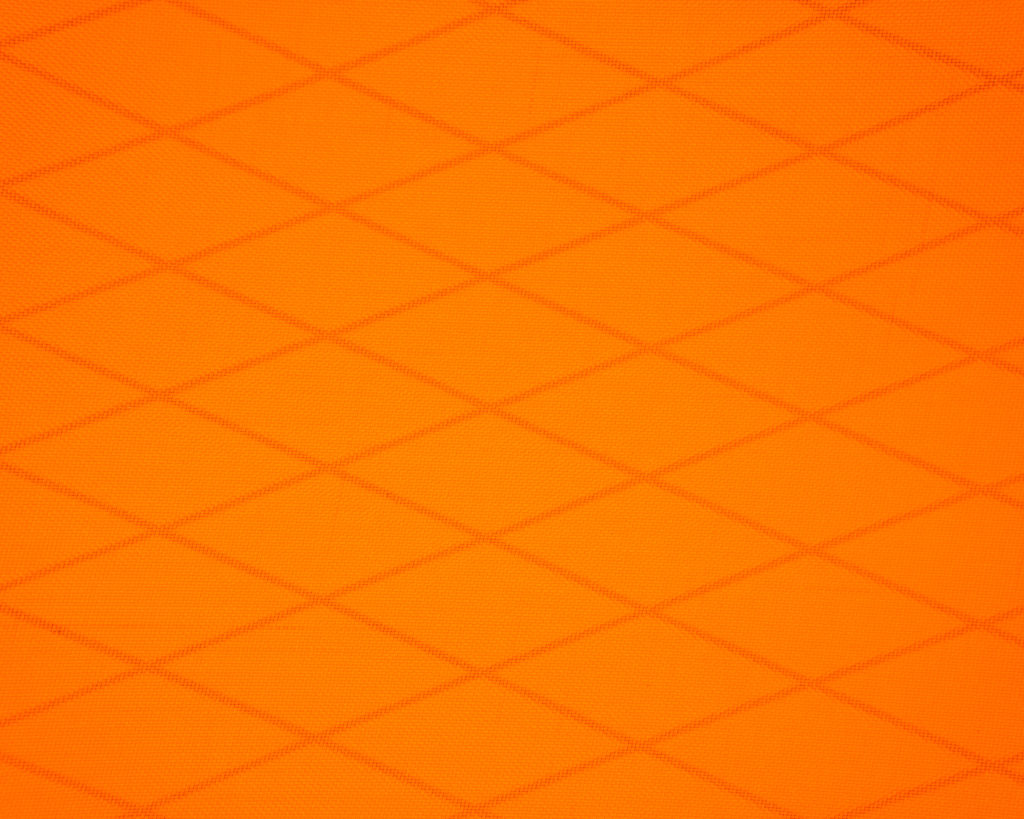
VX21 is stiff and structured, so packs made from it look crisp and hold their shape. The diamond X-PLY pattern shows through on many colors.
Spec
Manufacturer value
Content
60% nylon, 40% polyester
Construction
DWR; 210 denier plain weave nylon face; 0.25 mil polyester film; black post-consumer recycled polyester X-PLY® at 22°; 50 denier polyester taffeta backing
Weight
6.2 oz/yd² (210.0 g/m²)
Width
59.0 in (150.0 cm)
Tear strength
Warp 108.5 N / 24.4 lb, fill 76.5 N / 17.2 lb
Abrasion (ASTM D3884)
500 cycles
Waterproof
13.8+ bar (200+ psi)
Manufacturer colors
Black, White, Slate, True Red, Deep Blue, Dark Green, Coyote Brown, Spanish Teal, Bahama Blue, Federal Yellow, Newport Navy, Cadmium Green, Coral
Where I use it: Flex Fanny Pack (Port, Purple, Teal) and some limited selection on our backpacks.
X-Pac VX25
X-Pac VX25 is the heavier-duty sibling of VX21: a 250-denier face over the same X-PLY® and film construction, at 7.9 oz/yd² and rated waterproof to 200+ psi. Its 2,000-cycle abrasion score is four times VX21’s, which makes it a strong choice for pack bottoms and anything that gets dragged.
Spec
Manufacturer value
Content
100% polyester
Construction
DWR; 250d polyester face; black post-consumer recycled polyester X-PLY® at 22°; 0.25 mil polyester film; 50 denier polyester backing
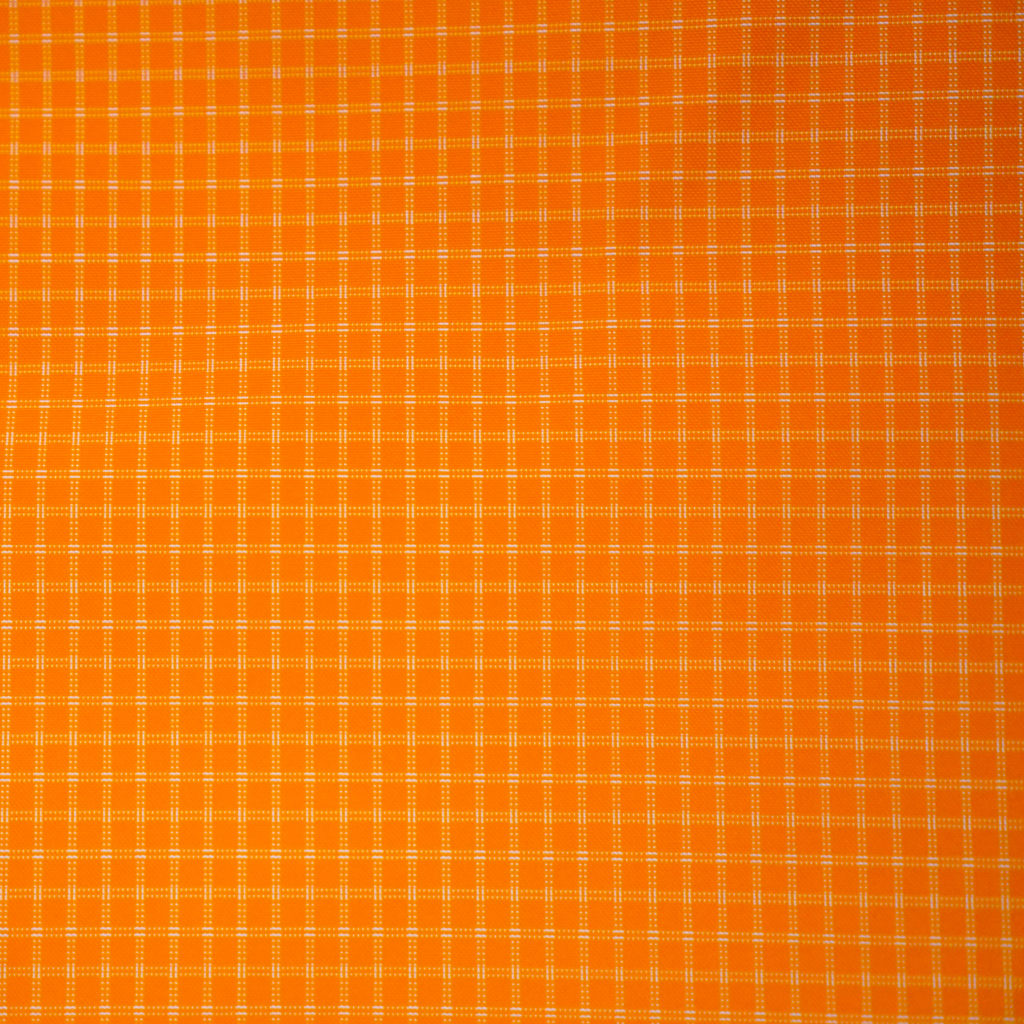
Where I use it: Scrambler 17L exterior (Bright Orange), Flex Fanny Pack and Hipbelt Pocket (Fluorescent Orange).
X-Pac UX10
X-Pac UX10 is an 85 g/m² (about 2.5 oz/yd²) laminate with a woven Ultra-PE (UHMWPE) face, an Ultra-PE X-PLY® reinforcement and a polyester film backing, rated waterproof to 200+ psi. It is the lightest X-Pac I use and has very high tear strength for its weight.
Spec
Manufacturer value
Content
56% Ultra-PE, 44% polyester
Construction
100% Ultra-PE weave fabric face; Ultra-PE X-PLY® reinforcement at 22°; polyester film backing
Where I use it: The Divide Sling Bag (UX10 White).
Dyneema® Composite Fabric (DCF) Hybrid 5.0 and 2.92
DCF Hybrid is Dyneema® Composite Fabric (formerly Cuben Fiber) laminated to a woven polyester face, which makes it fully waterproof and far more abrasion resistant than plain DCF. The 5.0 oz/yd² version (CT9HK.18/wov.6) uses a 150-denier polyester face over a 2.15 oz/yd² DCF layer; the 2.92 oz/yd² version (CT5K.18/wov.32c) uses a 50-denier polyester face over a 1.43 oz/yd² DCF layer.
DCF Hybrid 5.0 can be custom printed through OutdoorINK, which is how I make prints like Coloring Book. The 2.92 version is lighter and best for small bags that don’t see much abrasion. 2.9 DCF Hybrid used to be the gold standard for backpacks, but with all of the recent new tech laminates that have come out, I generally don’t recommend it anymore.
Where I use it: DCF Hybrid 5.0 on the Front Range 40L and Flatiron 28L (Coloring Book), Flex Fanny Pack, UL Dog Bowl, Hipbelt Pocket and the Anywhere Fanny Pack (custom OutdoorINK colors). DCF Hybrid 2.92 on the Divide Sling Bag (Black).
210D Venom™ Gridstop ECO
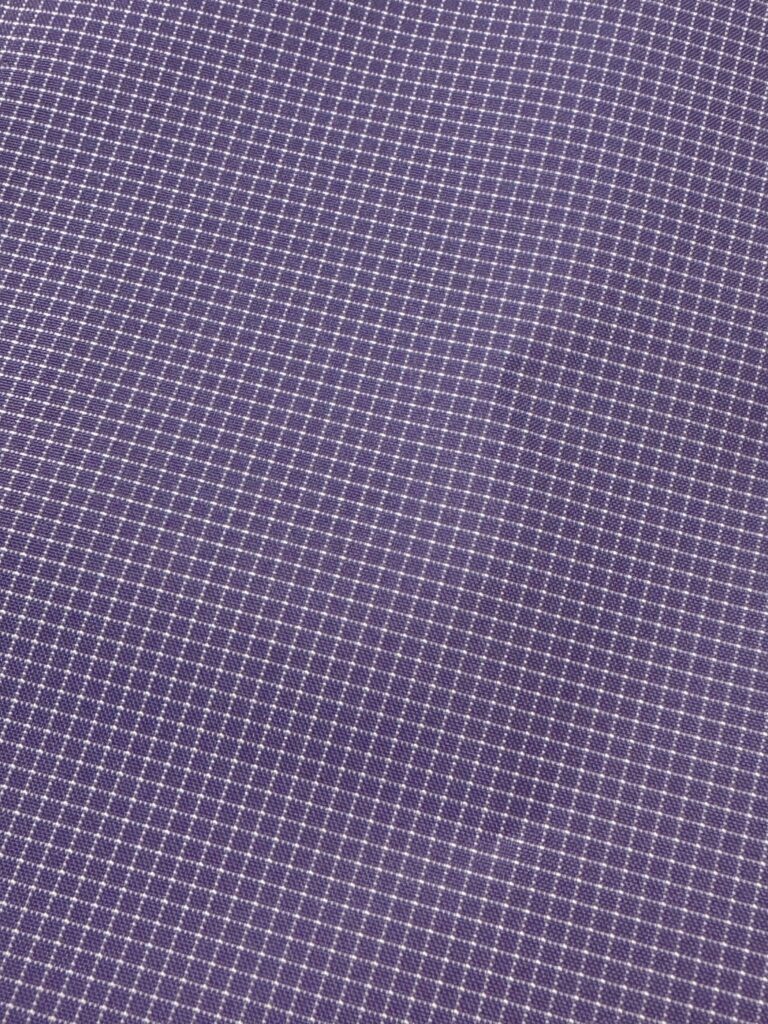
210D Venom Gridstop ECO is a 4.5 oz/yd² recycled 210-denier nylon with a 200-denier UHMWPE ripstop grid (13% UHMWPE by content), a waterproof polyether PU coating on the back and a PFC- and PFAS-free C0 DWR on the face. It is similar to UltraGrid in weight and construction.
Spec
Manufacturer value
Denier
210D recycled nylon x 200D UHMWPE (13% UHMWPE)
Weight
About 4.5 oz/yd² (151 gsm)
Width
58 in
Finish / coating
PU coated back (polyether based, waterproof); PFC and PFAS free C0 DWR front
RBTR made the reinforcement ripstop yarns to have an even smaller grid, which in theory increases durability and gives it a unique look compared to the other ripstop fabrics on the list. The PU coated back gives this fabric the edge on water resistance compared to the other ripstop nylons, and as a result is easier to sew.
Where I use it: Front Range 40L and Flatiron 28L (Soft Purple), Scrambler 17L exterior and interior, Flex Fanny Pack, Hipbelt Pocket, Hiker Zip Wallet.
210D ROBIC® Ripstop Nylon
210D ROBIC® Ripstop is a 4.4 oz/yd² high-tenacity nylon 6 with a 3 mm box-grid ripstop, a UTS (Ultra Tear Strength) coating on the back and a DWR on the face. It has a smooth, classic nylon look and is a durable, lower-cost option for linings and everyday bags.
Spec
Manufacturer value
Yarn
ROBIC nylon 6, 210D
Grid
3 mm x 3 mm box grid ripstop
Weight
About 4.4 oz/yd² (124.7 g)
Width
60 in including selvedge, about 58 in usable (147.3 cm)
Finish / coating
UTS coated backside, DWR front – waterproof
Manufacturer colors
Black, Charcoal Gray, Dark Olive, Electric Lime, Steel Blue
Ultralight quilt and apparel fabrics: MEMBRANE 15 vs MEMBRANE 10 vs MEMBRANE 7
MEMBRANE is Ripstop by the Roll’s line of featherweight, downproof ripstop nylons for quilts, wind shells and other insulated gear. The number is roughly the yarn denier, so MEMBRANE 7 is the lightest and MEMBRANE 15 is the toughest. I use MEMBRANE 15 ECO for the shell of the Ultralight Dog Quilt, because a dog quilt has to survive claws, dirt and being stuffed into a pack.
Spec
MEMBRANE 15 ECO
MEMBRANE 10
MEMBRANE 7
Weight
0.9 oz/yd² (30.5 gsm)
0.75 oz/yd² (listed as 21 grams)
0.56 oz/yd² (19 gsm)
Denier
15D
10D micro-grid ripstop
7D
Content
100% recycled nylon, 430T
Nylon
Nylon
Finish / coating
Breathable, calendered with C0 PFC-free DWR
Breathable, calendered with C6 DWR
Breathable and calendered/downproof with PFC and PFAS free DWR
Downproof
Yes, 5/5 IDFL
Yes, 5-Star IDFL rated
Yes, but tends to lose slightly more down over time than heavier, higher-denier downproof fabrics
Air permeability
Not listed
4.4 CFM
56.3 CFM
Width
About 58 in (147 cm)
About 56 to 58 in (142 to 147 cm)
58 in (147.3 cm)
Air permeability (CFM) is how much air passes through the fabric: lower is more wind resistant, higher is more breathable. MEMBRANE 10’s 4.4 CFM makes it very wind resistant for its weight, while MEMBRANE 7 trades wind resistance and durability for the lowest weight.
Where I use it: MEMBRANE 15 ECO on the Ultralight Dog Quilt shell.
Some fabrics come in small batches, and once they’re gone they may not come back. These are currently on the Divide Sling Bag and the Scrambler 17L.
Hemp X-Pac
Hemp X-Pac is an extremely rare variant of laminated X-Pac. It has the classic diamond X-PLY waterproof backing on the inside, but the face is made from hemp. It has a natural, textured look unlike any other pack fabric I use. A Divide Sling Bag in Hemp X-Pac weighs about 7.2 oz.
X-Pac X50 Multicam
X-Pac X50 is X-Pac’s heavy-duty laminate: a 500-denier CORDURA® nylon face over a recycled polyester X-PLY® and a 0.5 mil polyester film, at 9.3 oz/yd² and rated waterproof to 200+ psi. I use it in MultiCam® Black, which pairs that toughness with a dark camouflage pattern. A Divide Sling Bag in it weighs about 6.6 oz.
Spec
Manufacturer value
Content
81% nylon, 19% polyester
Construction
DWR; 500 denier CORDURA® nylon face; black post-consumer recycled polyester X-PLY® at 22°; 0.5 mil shiny polyester film backing
Challenge Ultra TenX is a waterproof laminate under 3 oz/yd²: a 100% UHMWPE woven face with a three-directional UHMWPE cross-ply and a 0.75 mil recycled polyester film. It is seam-tapeable and one of the lightest fabrics I sew. A Divide Sling Bag in Green Ultra TenX weighs about 5 oz.
Spec
Published value
Challenge product ID
Ultra TenX
Construction
100% UHMWPE woven face; three-directional UHMWPE cross-ply; 0.75 mil recycled polyester film
Ultra 80TX is a brand-new Challenge fabric, and published specs aren’t available yet. I’ll add them here once they are. A Divide Sling Bag in Silver Ultra 80TX weighs about 5.6 oz.
How to choose a pack fabric
Thru-hiking and multi-day packs: Ultra 200X for the best weight-to-durability ratio, or UltraGrid if you want more colors and a softer feel.
Wet climates and packrafting: a waterproof laminate (Ultra 200X, X-Pac or DCF Hybrid), sewn with seam-sealed or taped construction where it matters.
Pack bottoms and heavy abrasion: Ultra 200X (4,400 cycles) or X-Pac VX25 (2,000 cycles).
Everyday carry and commuting: EPX200, ROBIC or waxed canvas for a less technical look, or UltraGrid for durability.
Dog gear: UltraGrid, because it’s soft, quiet and very hard to tear.
Small bags where every gram counts: X-Pac UX10 or DCF Hybrid 2.92.
Fabric terms explained
Denier (D): the thickness of the yarn. Higher denier usually means a heavier, more abrasion-resistant fabric.
UHMWPE / Ultra-PE: ultra-high-molecular-weight polyethylene, the fiber family that includes Dyneema®. Extremely strong for its weight and naturally water resistant.
X-PLY® / CrossPly: a grid of reinforcing yarns laid diagonally inside a laminate to stop tears and stretch. It gives X-Pac and Ultra their diamond pattern.
Laminate vs. coated: laminates (X-Pac, Ultra, EPX, DCF) bond a waterproof film between layers; coated fabrics (UltraGrid, Venom, ROBIC) have a waterproof coating on the back.
Hydrostatic head (mm) and psi: how much water pressure a fabric holds back before leaking. 1,500 mm is very waterproof for a pack; 200 psi is far beyond anything rain can do.
ASTM D3884 (Taber abrasion): how many rubbing cycles a fabric survives. More is better.
ASTM D2261 (tongue tear): the force needed to keep a cut tearing, in warp and fill directions.
C0 DWR: a water-repellent face finish made without fluorocarbons (PFCs/PFAS).
oz/yd² and gsm: fabric weight per square yard or per square meter. 1 oz/yd² is about 33.9 gsm.
Frequently asked questions
What is the difference between Ultra 200X and UltraGrid?
Ultra 200X is a waterproof laminate with a woven UHMWPE/polyester face (4.6 oz/yd², 4,400 abrasion cycles). UltraGrid is a PU-coated recycled nylon with a UHMWPE grid (4.3 oz/yd², 1,100 abrasion cycles, “does not tear”). Ultra 200X is more abrasion resistant and waterproof; UltraGrid is softer, quieter and comes in more colors.
Is X-Pac waterproof?
Yes. X-Pac VX21, VX25 and UX10 are laminates with a waterproof film, rated to 13.8+ bar (200+ psi) by Dimension-Polyant. Seams and zippers are the weak points on any pack, not the fabric.
What is DCF Hybrid?
DCF Hybrid is Dyneema® Composite Fabric laminated to a woven polyester face. The face adds abrasion resistance and a more traditional look, and the DCF layer keeps it fully waterproof. I use the 5.0 oz/yd² and 2.92 oz/yd² versions.
Which pack fabric is the most abrasion resistant?
Among the fabrics with published ASTM D3884 numbers, Ultra 200X is highest at 4,400 cycles, followed by X-Pac VX25 at 2,000 and UltraGrid at 1,100. VX21, UX10 and EPX200 are each listed at 500 cycles.
Are these fabrics PFC-free?
UltraGrid, ECOPAK EPX200, Venom Gridstop ECO, Venom UL Stretch Mesh ECO and MEMBRANE 15 ECO all use a fluorocarbon-free C0 DWR, and MEMBRANE 7 uses a PFC- and PFAS-free DWR, according to their makers. MEMBRANE 10 is listed with a C6 DWR. X-Pac lists a DWR but doesn’t specify the chemistry on its product pages.
All specifications are as published by the manufacturers and retailers linked above as of October 2026. Real-world values vary from roll to roll. Dyneema® is a trademark of Avient; X-Pac® and X-PLY® are trademarks of Dimension-Polyant; Venom™ is a trademark of Ripstop by the Roll; CORDURA® is a trademark of INVISTA; ROBIC® and MultiCam® are trademarks of their respective owners.
Best Ultralight Dog Backpack for Hiking: A Complete Guide
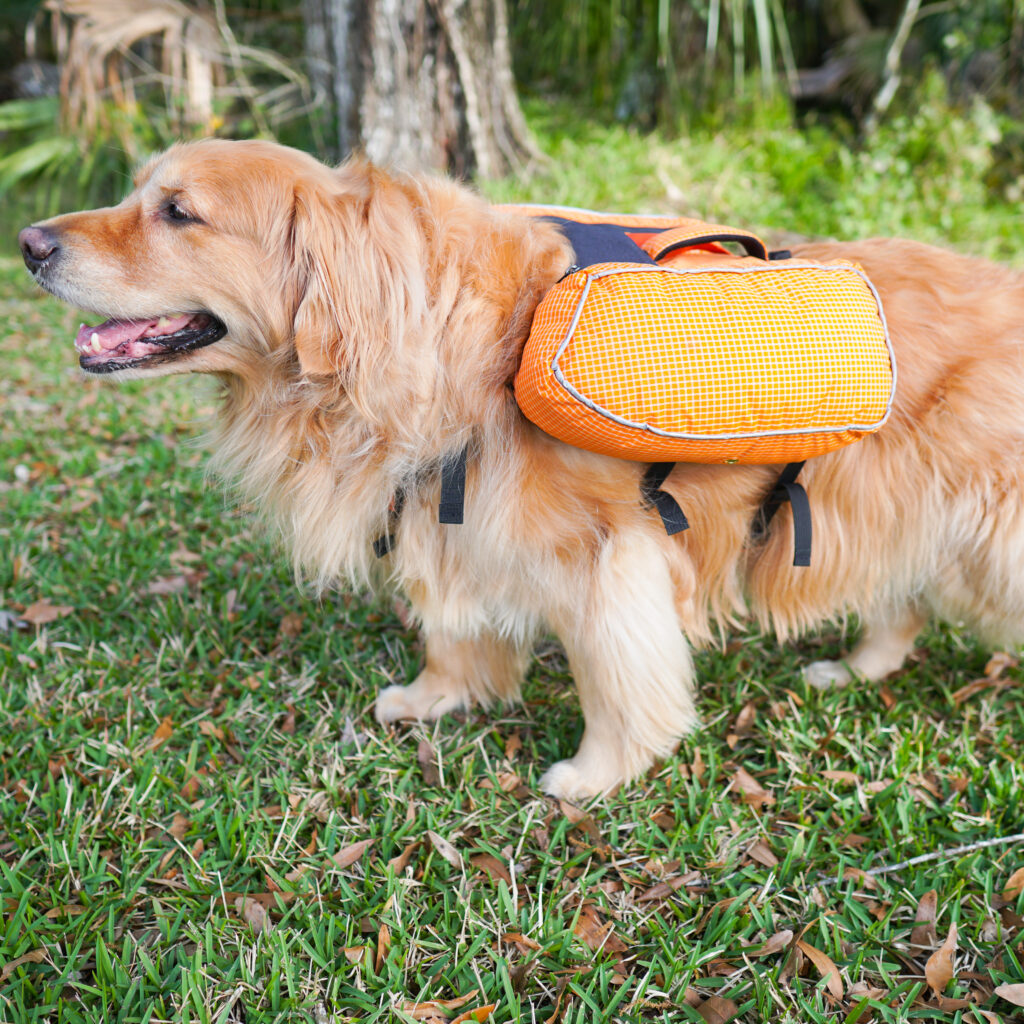
The Red Paw Packs Ultralight Dog Backpack is the lightest full-featured dog pack on the market. At just 9.4 oz (Small), 11.4 oz (Medium), and 12.9 oz (Large), it weighs a fraction of what major brands like Ruffwear or Mountainsmith offer — without sacrificing durability or features. Handmade in St. Petersburg, Florida from UltraGrid UHMWPE-reinforced fabric, this pack is built for thru-hikes and beyond.
Why Your Dog Needs an Ultralight Backpack
The story of Red Paw Packs and the ultralight dog backpack started 7 years ago in my college apartment. I had just been introduced to wilderness backpacking through a program at Florida State University, and I instantly fell in love. A few trips later, my golden retriever Lucy entered the picture — and I had a new question: “what am I supposed to pack for my dog and how can she carry it?”
After building a backpack for myself as my first “real” sewing project, I realized my dog needed one too. So I built her a really simple dog backpack with a small roll top bag on each side. It flopped around, barely held much, and got soaked when she swam in creeks — but she wore it and never complained for over 100 miles of hiking.
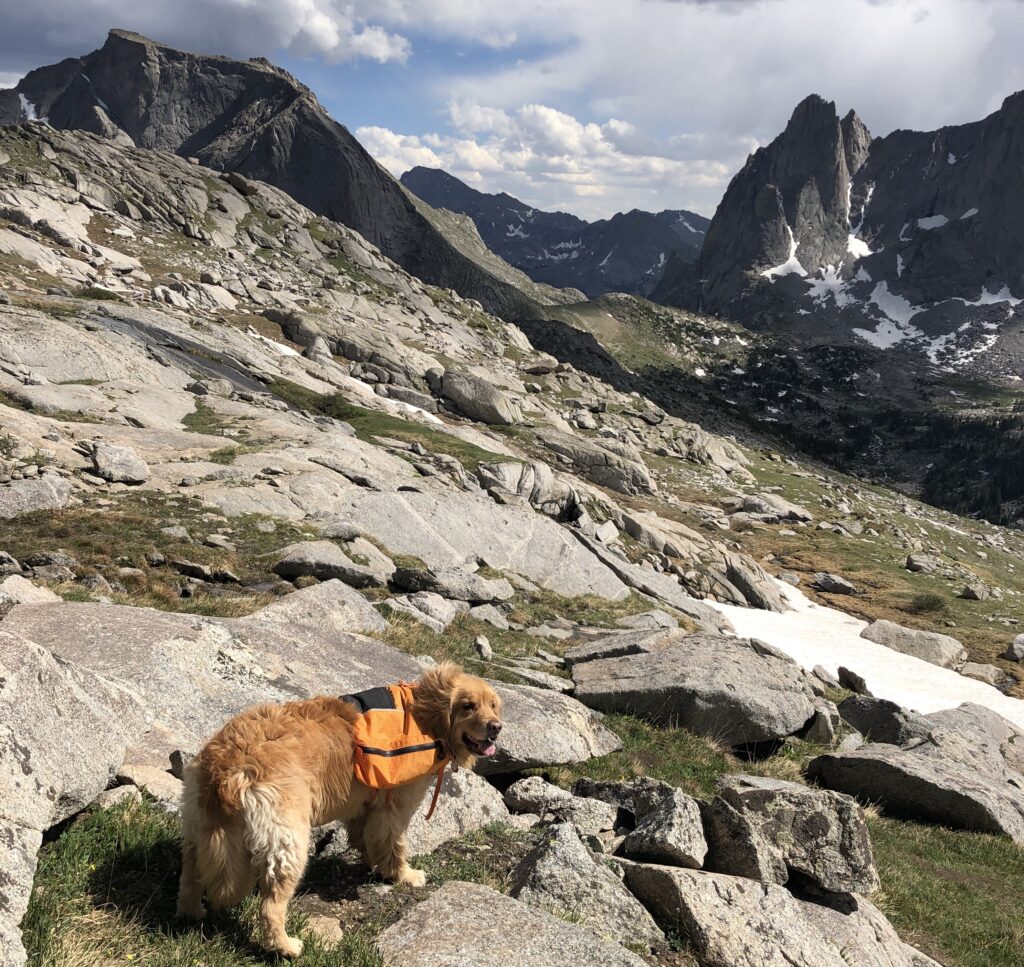
After years of field testing and many miles hiked across Colorado, Wyoming, and beyond, I finally created the one pack for your dog that they will not mind wearing. It is so lightweight they will not even notice it is there.
Weight Comparison: Red Paw Packs vs Other Dog Backpacks
Most dog backpacks on the market weigh between 1-2 lbs. The Red Paw Packs Ultralight Dog Backpack weighs under 13 oz in every size. Here is how it compares:
Dog Backpack
Weight (Medium)
Price
Material
Red Paw Packs Ultralight
11.4 oz
$219
UltraGrid UHMWPE
Ruffwear Approach
~22 oz
$100
420D nylon ripstop
Mountainsmith K-9
~24 oz
$85
Recycled polyester
Non-stop Dogwear Trail Light
~14 oz
$130
Hexivent mesh
Ultimate Direction Dog Vest
~8 oz
$80
Nylon ripstop (minimal capacity)
The Red Paw Packs dog backpack offers the best weight-to-capacity ratio of any dog pack on the market. While the Ultimate Direction Dog Vest is lighter, it is a minimal running vest with very limited carrying capacity. The Red Paw Packs dog backpack is a full-featured saddlebag design with 4-8L of capacity depending on size.
How Much Weight Can My Dog Carry?
A good rule of thumb is for your dog to carry no more than 15% of their total body weight on a backpacking trip. For a 50 lb dog, that means a maximum pack weight of 7.5 lbs — plenty for their food, a collapsible bowl, and waste bags. With the Red Paw Packs dog backpack weighing just 11.4 oz (Medium), you are spending less than 5% of that weight budget on the pack itself.
Key Features
UltraGrid UHMWPE fabric — Ultra-high molecular weight polyethylene reinforced fabric that is lightweight, abrasion-resistant, and durable enough for thru-hiking
Adjustable harness system — Fits a range of dog breeds within each size category
Saddlebag pockets — Balanced weight distribution so your dog walks naturally
Top Leash Pocket — Stretchy pocket to stow a leash when off-leash, pull it out instantly when needed
Breathable design — Mesh panels keep your dog cool on warm trail days
Three sizes — Small (9.4 oz, ~4L), Medium (11.4 oz, ~6L), Large (12.9 oz, ~8L)
What to Pack in Your Dog Backpack
Here is what I typically pack for Lucy on a multi-day backpacking trip:
Measure your dog’s girth (the widest part of their ribcage) to determine the right size:
Small — 22-27 inch girth
Medium — 27-32 inch girth
Large — 32-42 inch girth
When in doubt, contact me with your dog’s breed, weight, and girth measurement and I will help you pick the right size.
Frequently Asked Questions
Is the dog backpack waterproof?
The UltraGrid fabric is highly water-resistant but not fully waterproof. For creek crossings and rain, your dog’s gear will stay mostly dry. For extended rain, consider putting items in a small ziplock bag inside the pack.
Can puppies wear the dog backpack?
I recommend waiting until your dog is fully grown (typically 12-18 months depending on breed) before having them carry weight. You can let them wear the empty pack on shorter hikes to get used to the feeling.
How do I wash the dog backpack?
Hand wash with mild soap and lukewarm water. Hang to dry. Do not machine wash or use harsh detergents — they can degrade the UltraGrid fabric over time.
One thing I learned hiking and backpacking with Lucy is that your dog needs to travel light — just like you. I hope you find this lightweight backpack for dogs as revolutionary to your backpacking experience as I did.